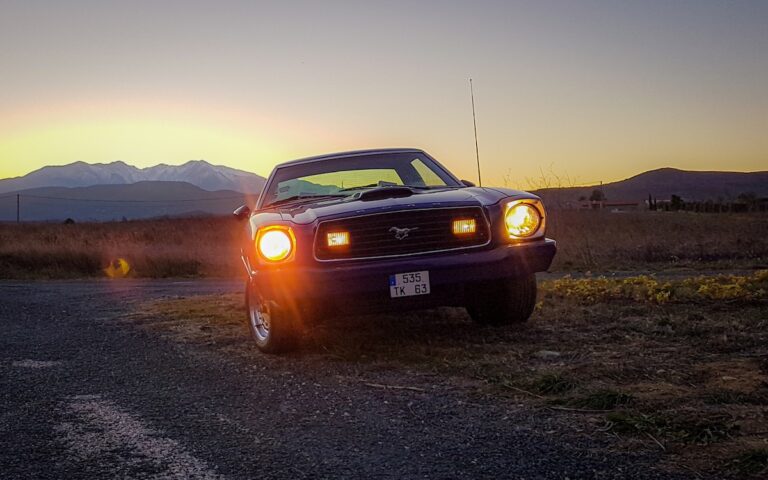
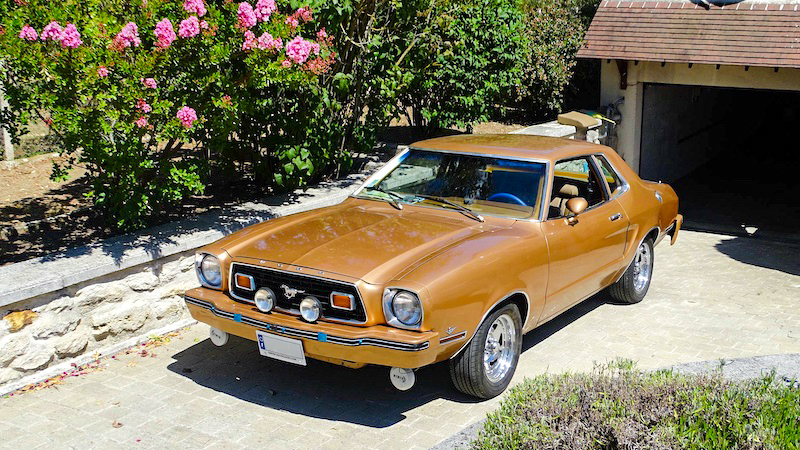
Restoring a 1978 Mustang II: José’s Lifetime of Mechanical Passion
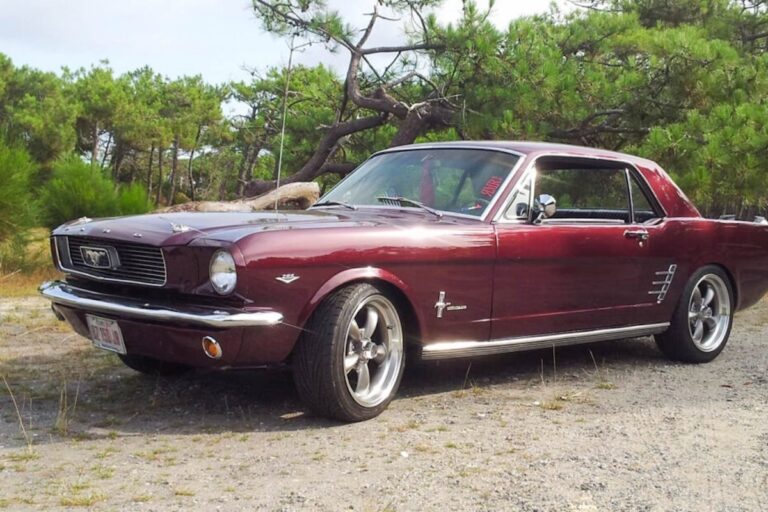
Some restoration stories are not about chasing perfection, but about taking the long way around. This DIY 1978 Mustang II restoration is one of those stories. José, 76 years old, lives in Seine-et-Marne, France and has spent his life building, fixing, and understanding machines. When he bought his 1978 Mustang II in 2018, he wasn’t looking for a show car — just a classic American car to work on, improve, and truly make his own.
In 2018, at 76 years old, José bought a 1978 Mustang II. The car was already forty years old. But for him, age had never been a limitation — neither for people, nor for machines. What followed was not a radical restoration, but a thoughtful, methodical journey to turn a classic Mustang into a reliable, well-sorted driver. A Mustang rebuilt the same way José has lived his life: carefully, intelligently, and always with purpose.

A Life Built Around Mechanics
José’s passion for mechanics started early. Very early.
In 1958, at just 14 years old, he built his first go-kart. Seven years later, in 1965, he went even further: using two scrap cars, he created his first automobile — a homemade 1950 Simca-based sport convertible.
That curiosity never stopped. In 1975, José built his own four-meter fiberglass speedboat, powered by a 40-horsepower engine and officially approved by maritime authorities. Land was no longer enough. He moved to water. Then, naturally, to the air.
In the 1980s, José became interested in aviation. He built a delta-wing ultralight aircraft, then went on to design some of the very first paramotors in France. In 1990, his expertise even led him to collaborate on a Nicolas Hulot Ushuaïa TV production in Corsica, where he built a wheel-less paramotor specifically for the show.
Decades passed. And eventually, José returned to where it all began: cars.

Why a Mustang II?
In 2018, José started looking for a new mechanical project. This time, he wanted an American car — something different, uncommon, and still accessible.
He quickly focused on the second-generation Mustang, built between 1974 and 1978. In France, the Mustang II remains rare. Prices were rising, but still far below those of first-generation cars. Most importantly, there were still solid examples available — cars that needed attention, not resurrection.
After weeks of online research, José found a 1978 Mustang II that fit his criteria: decent overall condition, no major structural issues, and plenty of room for improvement.
Before buying it, he traveled twice from Seine-et-Marne to Alsace to inspect and test-drive the car. On the second visit, he made his decision — and drove it home himself.

A First Drive… and a First Lesson
The return trip almost started with a surprise.
Less than 50 kilometers after picking up the car, José was flashed by a speed camera. He was convinced he was respecting the speed limit. Later, a GPS test revealed the issue: oversized tires had been fitted without adjusting the speedometer gear. The result? A 90-euro fine and one lost point on his license.
A small price to pay for a new Mustang adventure.
Small Projects, Done the Right Way
Only three months after the purchase, José began working on the interior.
Rather than outsourcing the job, he bought an old industrial sewing machine, sourced vinyl upholstery material, and started rebuilding the door panels himself. Two months later, the interior was transformed: fresh door cards, repainted plastics, and a brand-new carpet.
Then came the exhaust. The Mustang had a tendency to backfire — violently. One day, the exhaust system literally exploded. José calmly rebuilt a temporary system using salvageable parts, already planning a future stainless-steel setup.

Going Deeper: Engine and Drivetrain
José decided to go further. Much further.
He removed the engine and transmission to sandblast and repaint the engine bay. During disassembly, several issues appeared: missing gaskets (including exhaust manifolds and thermostat housing), a misaligned crankshaft seal causing major oil leaks, and an over-tightened, cracked fuel pump.
Each problem was addressed methodically. New gaskets were installed properly. The fuel pump was rebuilt using a lathe and milling machine. The front brake calipers were restored. Before reinstalling the engine, José replaced the clutch cable with a hydraulic clutch system — entirely custom-built.
He also modified the door locking system to add central locking, another example of subtle modernization done with intelligence.

Always Improving
The work never really stops.
José later discovered that the gearbox had been replaced by a unit from a first-generation Mustang — not ideal for a Mustang II. After research, he sourced a correct Mustang II transmission, which will be installed during the next winter session.
Planned upgrades also include a rear axle rebuild and the addition of power steering, which his Mustang did not originally have — all aimed at improving comfort and long-term reliability.

A Mustang Built to Be Used
José’s 1978 Mustang II is not a show car. It is something better.
It is the result of a lifetime of experience, curiosity, and craftsmanship. A classic Mustang improved quietly, patiently, without shortcuts. A car built by a man who has spent his entire life understanding how things work — and how to make them better.
And that, perhaps, is what Mustang Stories is really about.