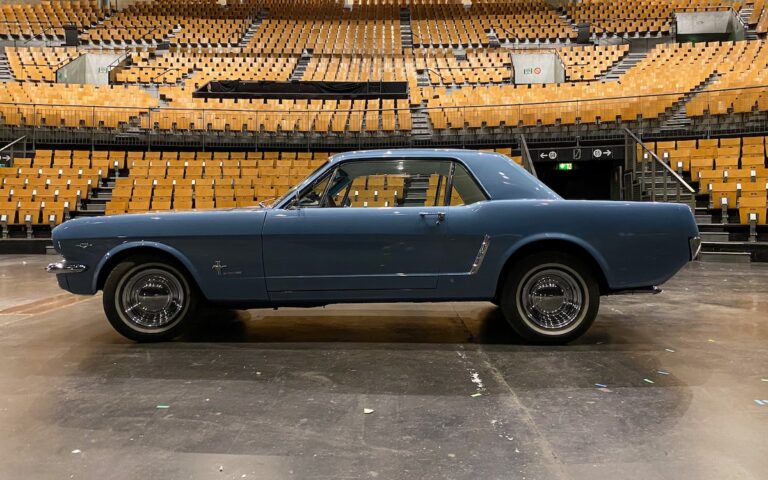
Mustang GT 1966 Export: A French-Spec Mustang Brought Back to Its Roots
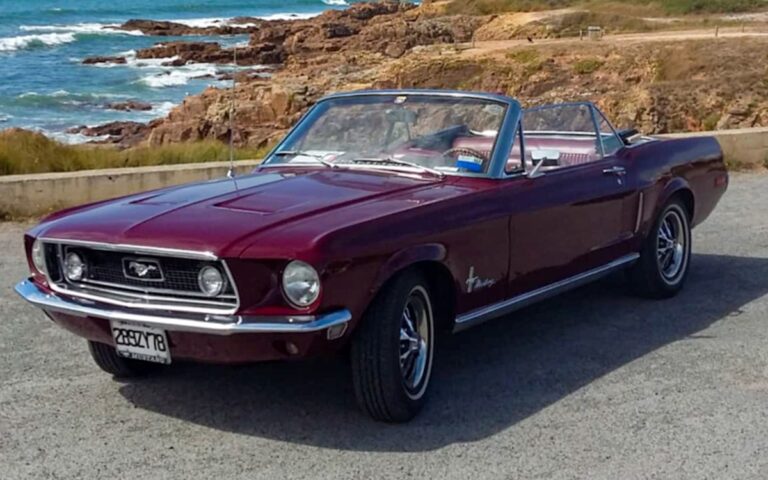
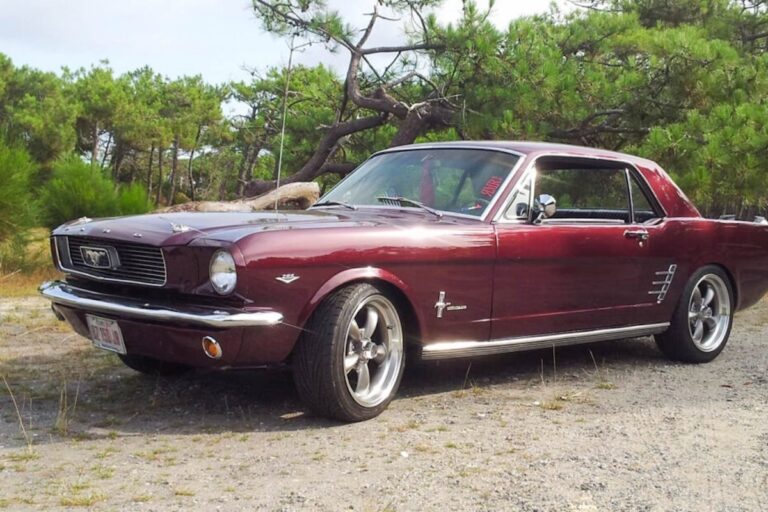
Some cars are more than machines. They carry memories, places, and sometimes entire lives within their steel bodies. Freddy’s Mustang GT 1966 Export is one of those cars. Delivered new in France, shaped by decades of ownership and mechanical realities, this Mustang tells a uniquely European story—one of patience, setbacks, and an unwavering desire to return a car to what it once was.
Built for France: Understanding the Mustang Export Models
In the mid-1960s, Ford understood that selling Mustangs in Europe required more than simply shipping American cars overseas. French export Mustangs were ordered with specific equipment to meet local regulations and customer expectations. Export Mustangs delivered to France often came with front disc brakes and, in some cases, the handling package. Lighting changes, however, were usually carried out by French dealers after arrival in order to meet local regulations.
Freddy quickly learned that these Mustang GT 1966 Export models were not just rarer than their U.S. counterparts, but also deeply tied to a particular moment in French automotive culture—when American performance still felt exotic, bold, and slightly rebellious on European roads.

A Mustang Delivered New in France
Born on October 25, 1965, Freddy’s Mustang never touched American asphalt. Instead, it crossed the Atlantic directly to Lyon, where it was registered in April 1966. Its chassis number places it firmly among early French export cars, many of which were sold through official Ford dealers and carefully specified from the factory.
Little is known about its very first owner, but the car’s long life in France spared it from many of the modifications that altered so many Mustangs during the 1980s. It remained largely intact, wearing period accessories rather than trend-driven upgrades.

From Dream to Reality: Freddy’s Search for the Perfect Export Mustang
Freddy’s fascination with American cars started early, shaped by video games, television series, and chance encounters with Mustangs on French roads. While his friends debated European or Japanese performance cars, he quietly dreamed of something else—a Mustang, preferably a 1966 GT, and ideally an export model.
Years passed. There was a Camaro Z28 experiment, financial lessons learned the hard way, and a promise made to himself: one day, he would own the right Mustang, not just any Mustang. When he finally had the means, he knew exactly what he was looking for—a Mustang GT 1966 Export, manual transmission, Pony interior, and history to match.
The Day It Finally Happened: Buying the Mustang
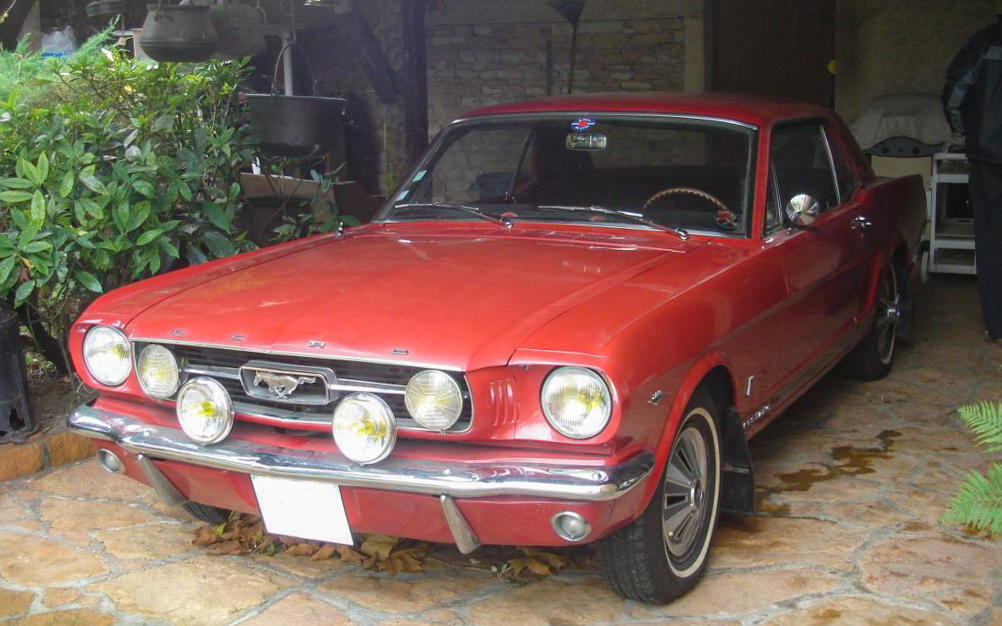
In August 2014, an unexpected email changed everything. The owner of a red 1966 GT export—someone Freddy had contacted a year earlier—asked a simple question: Are you still interested?
Freddy didn’t hesitate. He travelled to Strasbourg, fully aware that years had passed and that the car was no longer exactly as he remembered it. Some export-specific details were missing, replaced or removed over time. Still, beneath those changes, the Mustang felt right. After a test drive and a brief negotiation, the deal was done.
The return journey, however, quickly shattered the dreamlike atmosphere. Vibrations, strange noises, oil sprayed across the engine bay—reality arrived hard. Freddy reached home with the Mustang, but not with the joy he had imagined. The purchase marked not an ending, but a beginning.

A Mustang with a Past: Tracing the History of a French Export
Determined to understand his car, Freddy began piecing together its past. Slowly, through former owners and old photographs, a story emerged. One owner, Alexandre, had kept the Mustang for decades, driving it daily before eventually storing it away.
This Mustang GT 1966 Export had lived a full life—used, respected, and ultimately preserved. That realization gave Freddy clarity. This wasn’t a car to modernize or reinvent. It was a car to respect.

Mechanical Reality Check: When the Dream Meets the Wrench
Reality struck again once Freddy began driving regularly. Brake issues appeared. Engine hesitation followed. Then came more serious discoveries: worn mounts, drivetrain play, failing components hidden beneath years of use.
Each repair uncovered another problem. What began as maintenance quickly turned into restoration. The emotional toll matched the financial one, yet Freddy pushed forward, guided by a simple principle—fix it properly, or don’t fix it at all.

Keeping the Original Heart Alive: Rebuilding the 289
The breaking point came in 2017. Compression tests revealed the truth: the original 289 V8 was worn beyond reasonable repair. Rather than replacing it, Freddy chose the harder path—saving the original engine.
In 2019, the block was rebuilt professionally, preserving the numbers-matching heart of the car. It was a decisive moment. This Mustang would remain itself, even if it meant years of waiting and restraint.

Back to Factory Form: Returning the Mustang to French Export Specification
With the mechanical foundation secured, Freddy turned his attention to authenticity. Export headlights returned. Marchal fog lamps found their place once again. Period-correct lighting replaced modern LEDs. A proper Autolite carburetor replaced the later Holley.
Even the smallest details mattered. Stickers, lenses, wheels—everything moved closer to how a Mustang GT 1966 Export would have looked on French roads in the late 1960s. The goal was not perfection, but coherence.

And Now?
After years of work, Freddy’s Mustang is still a journey in progress. The body shows its age, but proudly so. Future plans remain modest: period roof racks, Michelin tires, and perhaps a few final French touches.
More than anything, Freddy wants to drive. To finally enjoy the car not as a project, but as a companion. Like those who owned it before him, he hopes to keep it for the long road ahead—faithful to its roots, and deeply personal.