1977 Mustang II Survivor: Nicolas’ Story
Some Mustang stories begin with a lifelong dream. Others start at a turning point in life.
In 2015, Nicolas was returning to France after a short stay in Canada. His life was changing fast — a new chapter ahead, a family about to begin, and a growing need to reconnect with something tangible, mechanical, and deeply rooted in American culture. That’s when a very specific idea took shape: owning a classic Ford Mustang.
Not a restored show car.
Not a modern muscle car.
But a survivor.
What Nicolas was looking for wasn’t perfection. He wanted an honest car, one with a past, flaws, and stories already written into its metal. A Mustang he could drive, learn from, and gradually make reliable again. That search led him to an unexpected choice: a 1977 Mustang II survivor.
A Small Piece of America
The spark came from an episode of Wheeler Dealers — Season 9, Episode 14. Watching Mike Brewer and Edd China bring an old Mustang back to life planted a seed. Suddenly, the idea of owning a classic American car felt achievable.
At first, Nicolas considered more modern Mustangs. Mid-2000s GTs briefly made sense. But as prices climbed and his tastes evolved, something shifted. Older cars began to feel more authentic. More raw. More meaningful.
Early Mustangs from the 1960s were already out of reach. That’s when the Mustang II appeared on the radar — often misunderstood, frequently overlooked, yet deeply connected to a unique era in American automotive history.
Born during the oil crisis, the Mustang II was Ford’s response to changing times. Smaller, lighter, more economical. For many enthusiasts, it was the “unloved” Mustang. For Nicolas, it was an opportunity.

Choosing a Survivor, Not a Show Car
After days of searching, two cars stood out.
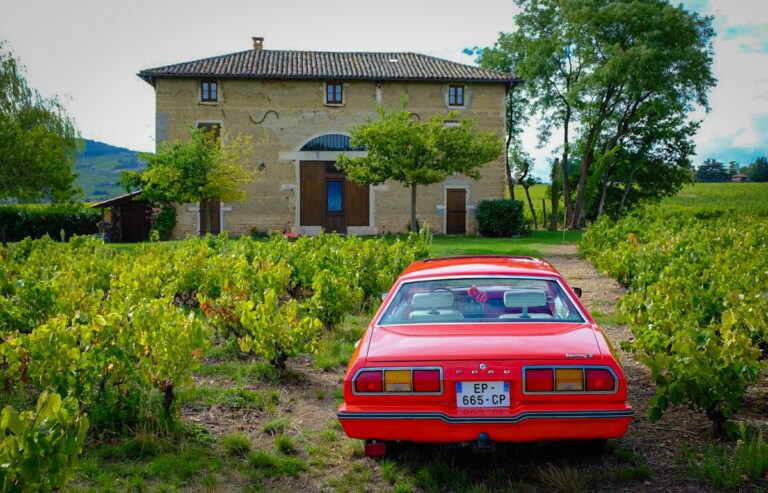
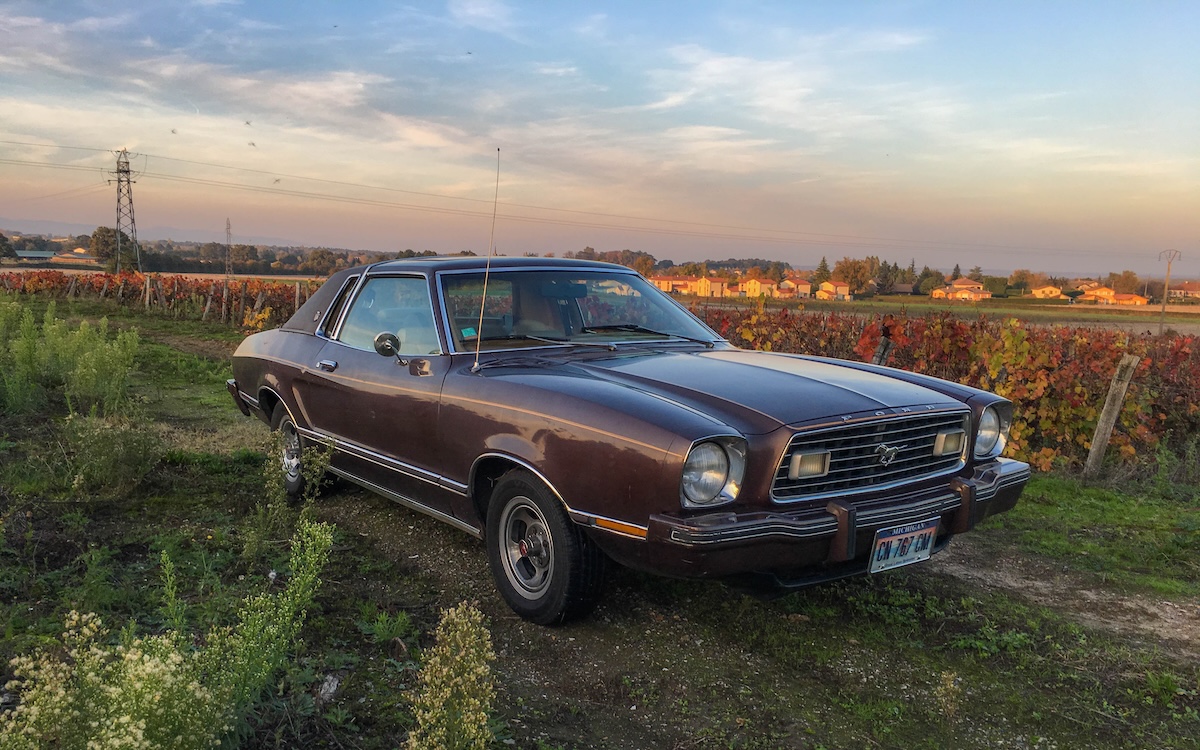
The first was a blue 1974 Mustang II GHIA, visually perfect but mechanically tired. The second wore a Dark Brown Metallic paint — not an obvious choice — but came with something far more important: honesty.
The ad said it all. The car drove, needed work, and hadn’t been disguised. Brakes, exhaust, lights, and various mechanical details required attention. It wasn’t pretending to be anything else.
That authenticity made all the difference.
After several conversations with Patrice, the owner, Nicolas hesitated. Becoming a father changes priorities. Buying a classic car doesn’t always feel reasonable. But then came a Skype call. Patrice walked around the car, showed the details, and finally started the engine.
The 2.8L Cologne V6 came to life instantly.
That sound sealed the decision.
Meeting the Mustang
On May 2, 2015, Nicolas and his friend Dorian drove to meet Patrice halfway, in Bourges. There, waiting quietly, was the Mustang II.
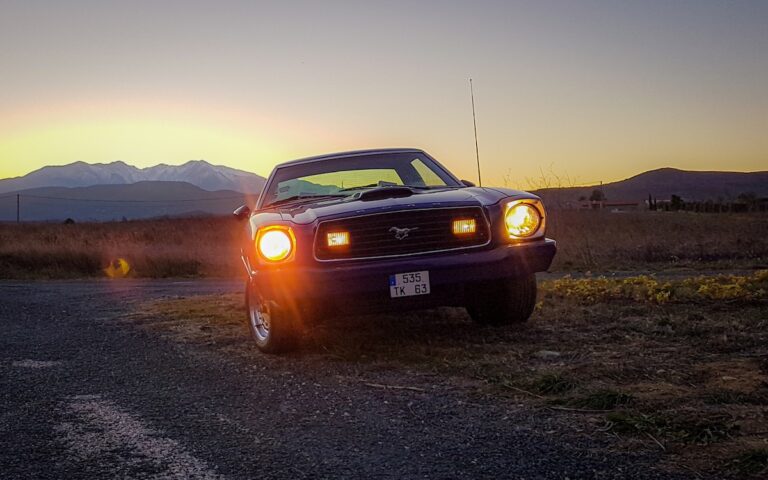
Under the hood: the V6 paired with a C3 automatic transmission. Nothing extreme. Nothing flashy. Just enough to begin a journey into the Mustang world.
With the paperwork signed, Nicolas drove the car home himself — from the center of France to the Beaujolais region, north of Lyon. The Mustang didn’t arrive on a trailer. It arrived under its own power.
That mattered.

A 1977 Mustang II Survivor with a Story
Once home, Nicolas began digging into the car’s past.
Using the VIN, the data plate, and later a Marti Report, the picture became clearer. This 1977 Mustang II GHIA had been built at the Dearborn plant in February 1977, slightly behind schedule. It left the factory for Newark, New Jersey, before being exported to France — one of only 249 Mustang II GHIAs destined for Europe that year.
Equipped with European-specific features like a km/h speedometer and modified exhaust, it was never meant to stay in the U.S.
This Mustang was born to travel.

A Life Before Him
Rather than listing every owner, Nicolas focused on what mattered.
The car lived most of its life in western France, carefully maintained by owners who respected it. One of them, Patrice, had even endured a long automatic transmission rebuild that earned the car a nickname among friends: “Miss Maaf” — a reference to a French insurance slogan meaning “I’ll get it one day.”
In 2015, Patrice decided it was time to let the car go.
That’s when Nicolas stepped in.

The Philosophy: Reliability First
The goal was simple: make the Mustang reliable before making it better.
Nicolas had no mechanical background. Not even basic experience. This project wasn’t about performance numbers or trophies. It was about learning — step by step — with the car as the teacher.
Fluids and filters came first. Then came electrical issues, cooling problems, worn hoses, tired components. Each problem followed the same pattern:
Diagnose. Fix. Learn. Drive.
Radiator replaced.
Gaskets renewed.
Ignition refreshed.
Brake system secured.
Fuel delivery improved.
Every fix built confidence. Every mile reinforced trust.

Suspension, Sound, and Subtle Upgrades
As reliability improved, comfort followed.
New shocks transformed the ride. Wider tires replaced the original narrow setup. Period-correct wheels took the place of hubcaps. The Mustang finally felt planted.
Then came the exhaust.
A custom stainless-steel system, inspired by the original layout but fitted with a Cherry Bomb–style muffler, gave the V6 a deeper, more confident voice. Not loud. Just right.
The Mustang didn’t shout. It spoke.
A Family Car — In Its Own Way
One modification mattered more than any other.
Rear three-point seat belts.
The Mustang II never had them. Nicolas added them so child seats could be installed safely. Soon, the car was no longer just a project or a classic. It became part of daily life.
Morning drives.
Short trips.
Memories forming quietly.
This 1977 Mustang II survivor carried Nicolas’ daughter to daycare during her first months of life.
That changed everything.

More Than a Car
Over time, the Mustang opened doors.
Through forums, meetups, and conversations, Nicolas became part of the Mustang community. What started as a personal project turned into friendships, shared knowledge, and lasting connections.
Eventually, the car was sold. Letting go wasn’t easy. Not financially — emotionally.
This Mustang wasn’t just metal and rubber. It was a chapter of life. A learning curve. A bridge between past and future.
Looking Forward
Some cars teach you how to drive.
Others teach you how to fix things.
This one taught Nicolas patience, humility, and the value of preserving history rather than rewriting it.
Not every Mustang needs a full restoration.
Some just need to survive — and keep moving forward.
And this 1977 Mustang II survivor did exactly that.