A 1965 Mustang Fastback Restoration: Learning to Slow Down
Some projects are born from obsession. Others come from experience. This 1965 Mustang Fastback restoration didn’t start with a childhood poster or a lifelong dream of American muscle. It started with a simple realization. After years spent behind the wheel of sharp European sports cars, Rudy wanted something different. Something slower, more physical, and more honest. Not a show car. Not a museum piece. A Mustang built to be driven.
From winding roads to American curves
Rudy lives in Nouvelle-Aquitaine, a region known for its winding roads and scenic drives. Cars have always played an important role in his life. As a student, he drove a Peugeot 504 Coupé, still in its original condition. Later came a Matra Bagheera S, patiently restored over three years. Then Porsche entered the picture, with a 944 Turbo and a 1980 911 SC, followed by British classics like a Triumph TR4 and an Austin-Healey.
Naturally, American cars caught his eye from time to time. Their lines, their engines, their presence. Yet, for a long time, he couldn’t picture himself driving one. Muscle cars felt too big, too blunt, not really suited to the tight roads he loved. At least, that’s what he thought.
Then came the Lotus Elise SC. Light, razor-sharp, brutally efficient. Too efficient, even. Every drive felt like a challenge to his driving licence. Slowly, the idea grew stronger: instead of chasing more performance, maybe it was time to change direction entirely.
Choosing the Fastback
Turning toward American cars felt like a 180-degree shift. Still, the choice had to make sense. Rudy considered several options: a Corvette C2, an early Camaro, a Dodge Charger. One was out of budget, another didn’t fully resonate, and the last felt excessive for his needs.
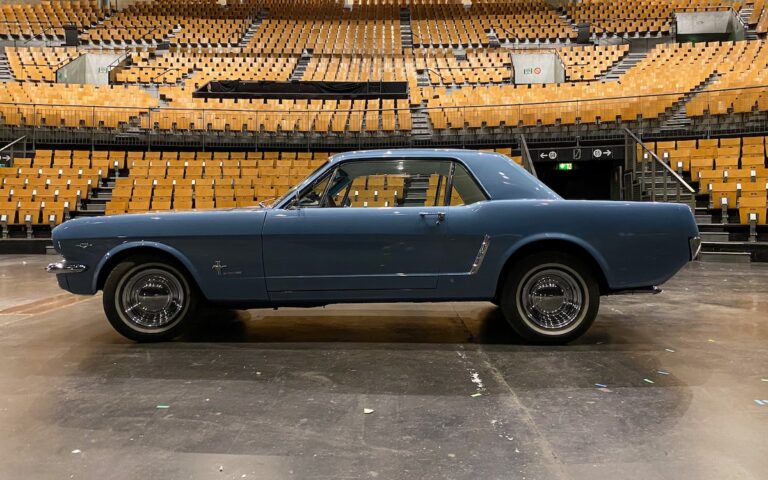
The answer became obvious. A 1965 Ford Mustang Fastback. For Rudy, it represented the essence of 1960s America: style, freedom, and a certain way of life. The specifications followed naturally. A manual gearbox was mandatory. The car had to be sound, honest, and within a budget of 35 to 40,000 euros.
French listings didn’t convince him. So, cautiously at first, he started looking toward the United States.
Buying sight unseen
One particular ad caught his attention. The car was in Baton Rouge, Louisiana. For weeks, Rudy checked the listing several times a day. He knew the rule. Never buy a classic without seeing or driving it. Still, one Saturday evening in November 2017, he called the seller.
They talked for over an hour and a half. The seller described the car in detail. Its history, its flaws, its strengths. When the call ended, Rudy did something he never thought he would do. He sent a transfer to secure the deal.
Sometimes, you don’t follow reason. You follow instinct.
First night together
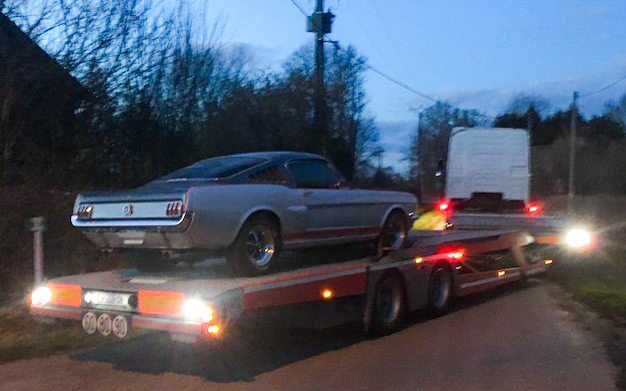
On February 12th, 2018, after nightfall, a transporter stopped in front of Rudy’s house. The Mustang sat on the trailer, dusty and tired. The battery was dead. With the help of his neighbors, Rudy pushed it into his barn.
It wasn’t beautiful in that moment. But it was his.
That night, he went to sleep smiling.
A Fastback with a past
Originally delivered in New Orleans in 1965, the Mustang left the factory with a V8, a four-speed Top Loader manual transmission, power steering, and the fold-down rear seat option. Its original color was Prairie Bronze, with a black interior.
The car spent long periods in storage between 1982 and 2001. In the early 2000s, it changed hands again and remained untouched until 2012, when a major restoration began in the United States.
That restoration was ambitious. The original engine made way for a BluePrint crate engine: a 302 bored to 306 cubic inches, producing around 390 horsepower. A Tremec T5 gearbox replaced the original transmission. A limited-slip differential, Wilwood front brakes, reinforced clutch, Borgeson power steering, aluminum accessories, and a Flowmaster stainless exhaust completed the mechanical transformation.
Visually, the car received new panels and a two-tone grey paint inspired by a modern Dodge Ram, separated by a red pinstripe. On paper, it looked impressive.
In reality, it was far from finished.
Adapting an American build to French roads
Once in France, Rudy quickly realized the Mustang had been built with drag racing in mind. Straight-line performance was there. Balance and finesse were not.
So he began to reshape the car to match his driving style. Adjustable Koni shocks replaced the existing suspension. Thicker anti-roll bars were added front and rear. The power steering was softened to regain feel. Bushings were replaced, and the front end was rebuilt.
Inside, the atmosphere changed too. A smaller steering wheel, a Hurst shifter with a white knob, wider seat belts, and racing-inspired details gave the cabin a more purposeful feel.
For a while, it worked. Until the rain came.
When everything comes apart
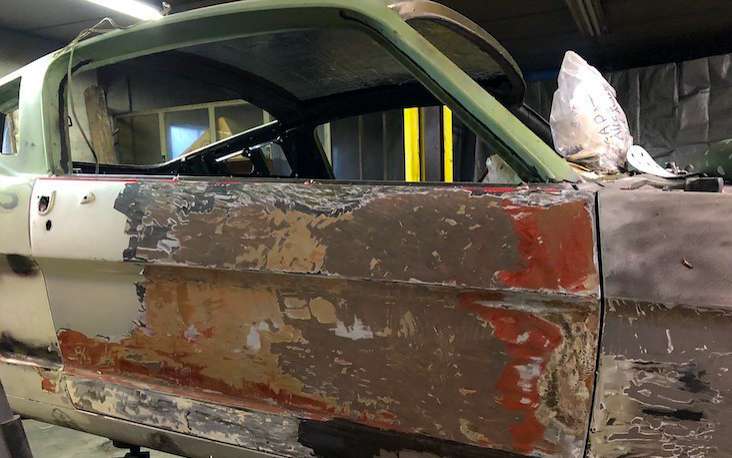
Water leaks appeared around the rear window and windshield. Paint bubbles followed. In March 2019, Rudy decided to investigate. What started as a local repair quickly turned into a full teardown.
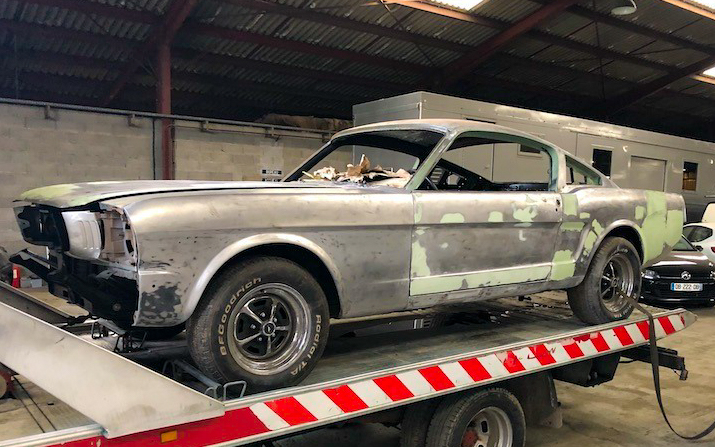
The Mustang was stripped to bare metal.
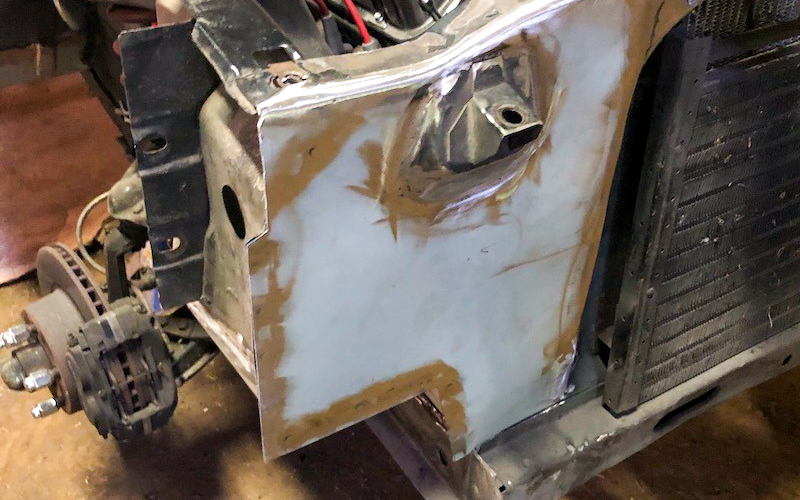
That’s when reality hit. Underneath the paint, rust hid everywhere. Poor repairs. Holes filled with windshield adhesive. Cosmetic work disguising serious issues. Rudy had restored cars before, but never structural metal.
This time, he learned.
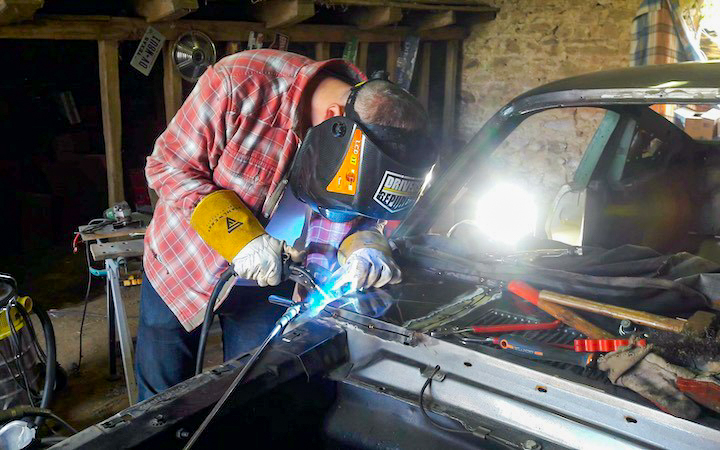
With the help of his brother-in-law, a bodywork professional, Rudy learned to weld, shape metal, and repair panels properly. He worked alone for weeks, lying on his back under the car, sparks falling around him. Eventually, a friend offered him space in a proper workshop to finish the job.
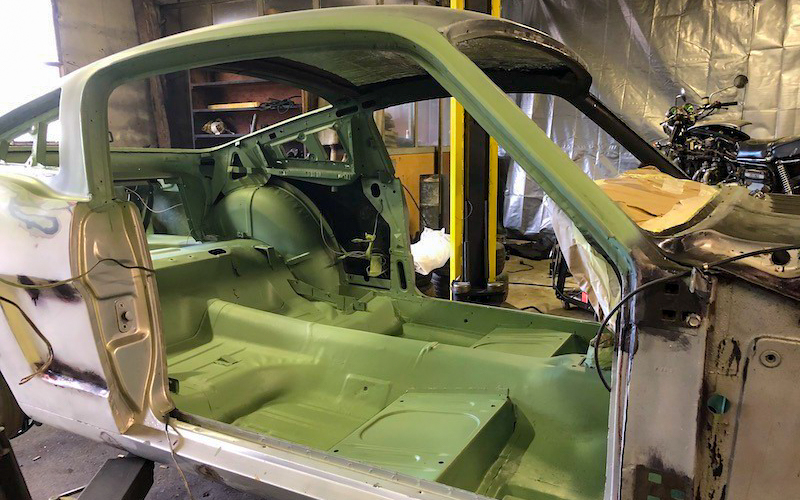
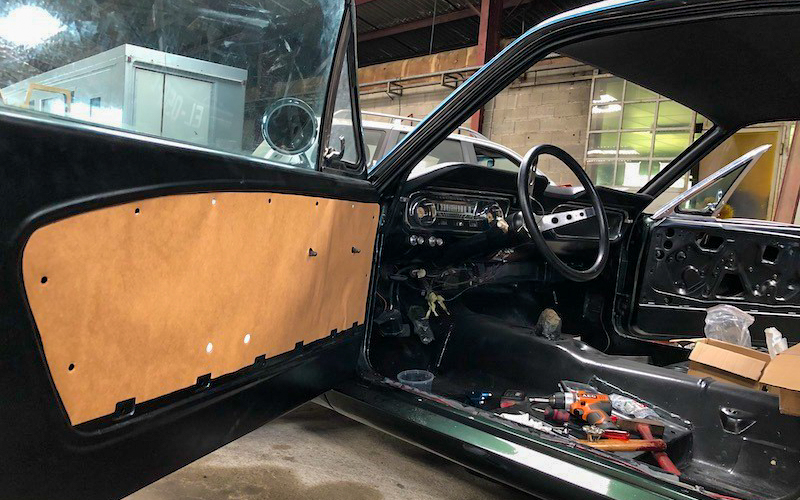
Every rusty section was replaced. The shell received Dinitrol protection, primer, and a durable polyurethane coating. Inside, the rear seat, headliner, and painted surfaces were refreshed. Door mechanisms were restored rather than replaced.
Back to its roots
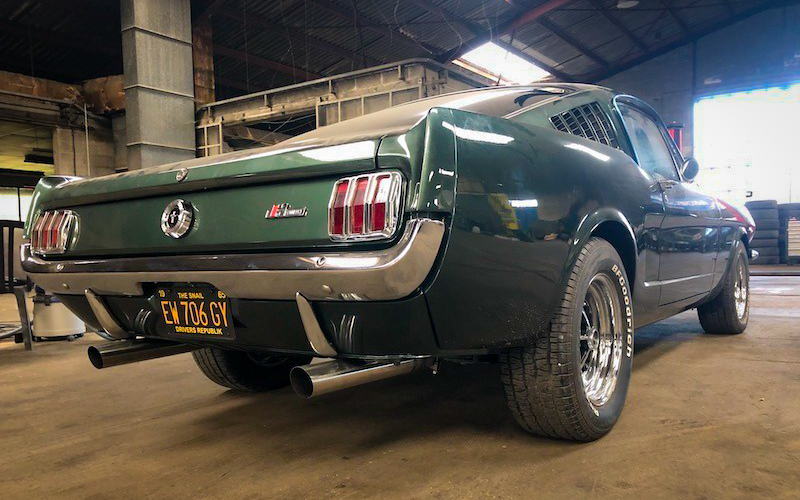
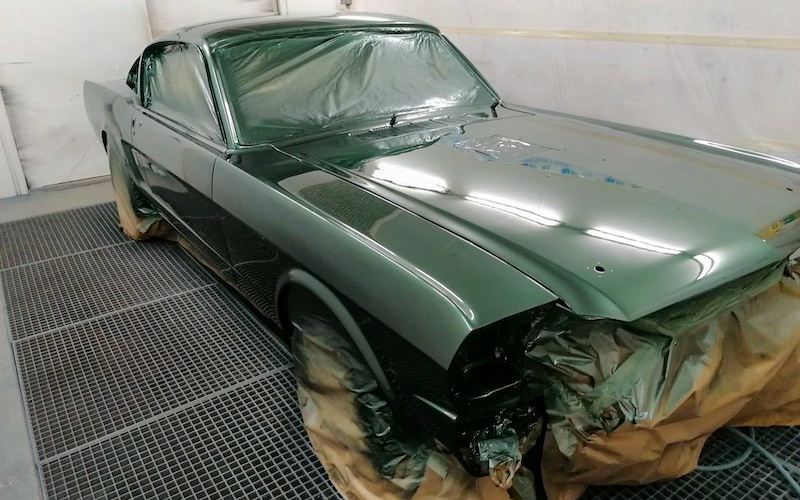
For the exterior, Rudy chose Ivy Green, a period-correct Ford color. All seals were replaced. The mechanical setup was refined further, with rear disc brakes, a new master cylinder, a rack-and-pinion steering system, and traction bars to improve acceleration control.
Despite the modern upgrades, the goal remained clear. Nothing flashy. Nothing obvious. The car had to look right. Feel right. Age gracefully.
Some imperfections were kept on purpose. Scratched door handles. A slightly worn dashboard. Traces of life.
This wasn’t about perfection. It was about honesty.
Built to share
The restoration took more than a year and a half. Around 540 hours of work, carefully logged in an Excel file. Today, the Mustang is reliable, balanced, and ready to drive.
Rudy knows himself well. He might sell it one day and start another project. Or he might keep it longer than expected. What matters most is what the car allows him to do now: drive, explore, and share moments with his two daughters in the back seats.
In the end, this 1965 Mustang Fastback restoration didn’t just teach him patience. It changed his relationship with driving. Slower. Deeper. More meaningful.
Sometimes, the best way forward is to slow down—and listen to what the road has to say.