
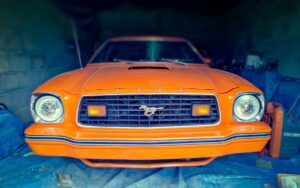
When the Mustang II debuted for the 1974 model year, it marked a dramatic shift in Mustang history — smaller, lighter, and more economical than any Mustang before it. Developed under Lee Iacocca’s leadership and introduced in late 1973, the Mustang II was Ford’s response to the oil crisis, rising insurance costs, and new emissions regulations that reshaped the American automotive landscape.
Unlike previous Mustangs, the Mustang II was based on the Ford Pinto platform — shorter, narrower, and significantly lighter than the 1973 Mustang — yet styled with enough pony car cues to retain Mustang identity. Named Motor Trend’s Car of the Year in 1974, it became one of Ford’s best-selling Mustang generations, moving over one million units from 1974 to 1978.
But how did it evolve from year to year?
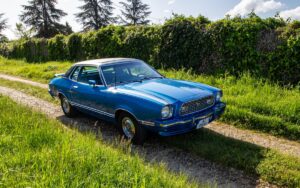
1974 – The Birth of Mustang II: Downsized and Efficient
The 1974 Mustang represented a complete break from the past:
- New downsized body — roughly 19 inches shorter and hundreds of pounds lighter than the 1973 Mustang.
- No V8 available in the U.S. — buyers chose between a 2.3 L four-cylinder and a 2.8 L V6, a shocking change for Mustang enthusiasts.
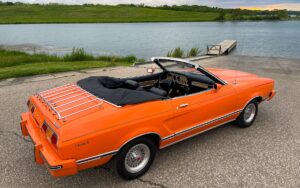
- Body styles: coupe (hardtop) and hatchback only — no convertible from the factory.
- Comfort and refinement were emphasized over outright performance.
Reception was mixed among purists, but the Mustang II filled a market need for efficient, sporty-looking coupes during the fuel crisis.
1975 – The V8 Returns (Finally)
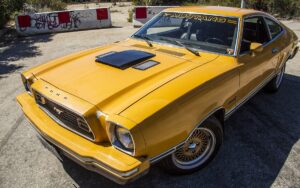
After the initial controversy of 1974, Ford listened to buyers:
- The 5.0 L (302 ci) V8 made a welcomed return, albeit tuned modestly compared to earlier Mustangs.
- Stylistic tweaks and trim updates kept the model fresh.
- Steel-belted radial tires became standard, and options like a moonroof and luxury packages were expanded.
The V8 gave Mustang II the performance many buyers had been craving — even if it was still mild by muscle car standards.
1976 – Cobra II Shakes Things Up
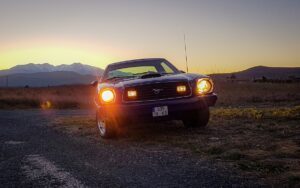
1976 brought more personality and visual flair:
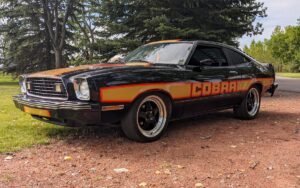
- The Cobra II package debuted, inspired by Shelby but largely cosmetic. It added bold racing stripes, spoilers, and louvers.
- Standard trims continued with coupe and hatchback variants.
- Mustang II’s image leaned more sporty, riding the bicentennial wave of nostalgia.
While not a true performance upgrade, the Cobra II made the Mustang stand out in the showroom.

1977 – Refinement and More Options
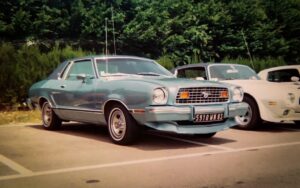
By 1977 the Mustang was maturing:
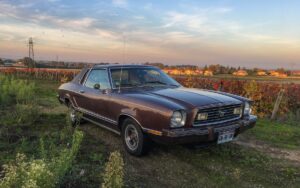
- A Sports Appearance Group on Ghia models added refined visuals such as cast-aluminum wheels and interior upgrades.
- T-Top removable glass roofs arrived on hatchbacks, giving open-air freedom without a full convertible.
- Two-tone paint options and lacy spoke aluminum wheels became popular choices.
Performance stayed similar to 1976, but comfort and personalization increased.
1978 – The Final Year: King Cobra and Legacy
In its last year of production, Mustang II went out with style:
- The King Cobra model took the Cobra II theme further with dramatic graphics and spoilers, becoming one of the most iconic Mustang II editions.
- Engine options remained the familiar 4-cyl, V6, and V8 lineup.
- Mustang II sales rebounded as the Malaise era wound down and enthusiasts began to appreciate the cars in retrospect.
Although it would be replaced in 1979 by a radically new Mustang design, the Mustang II kept the pony car alive through a difficult decade.
Why Mustang II Matters
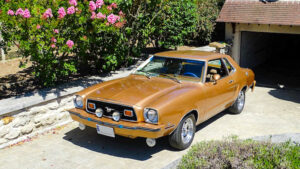
The Mustang II often divides Mustang fans — loved by some for its sales success and adaptability, criticized by others for abandoning raw performance. Yet it is undeniably a pivotal chapter in Mustang history, adapting the classic pony car formula to the economic and regulatory realities of the 1970s.
Whether you see it as a necessary evolution or a controversial detour, the Mustang II’s legacy is secured — bridging the gap between classic Mustangs of the 1960s and the performance resurgence that would come in the 1980s.