Mustang II Cobra II: a misunderstood Mustang
The Mustang II Cobra II rarely comes up when people talk about great Mustangs.
Instead, the conversation usually jumps straight to the 1960s fastbacks, roaring V8s, and raw muscle car glory. Because of that, the Cobra II often lives in the shadows of its own family tree.
Yet this car tells a story that deserves to be heard.
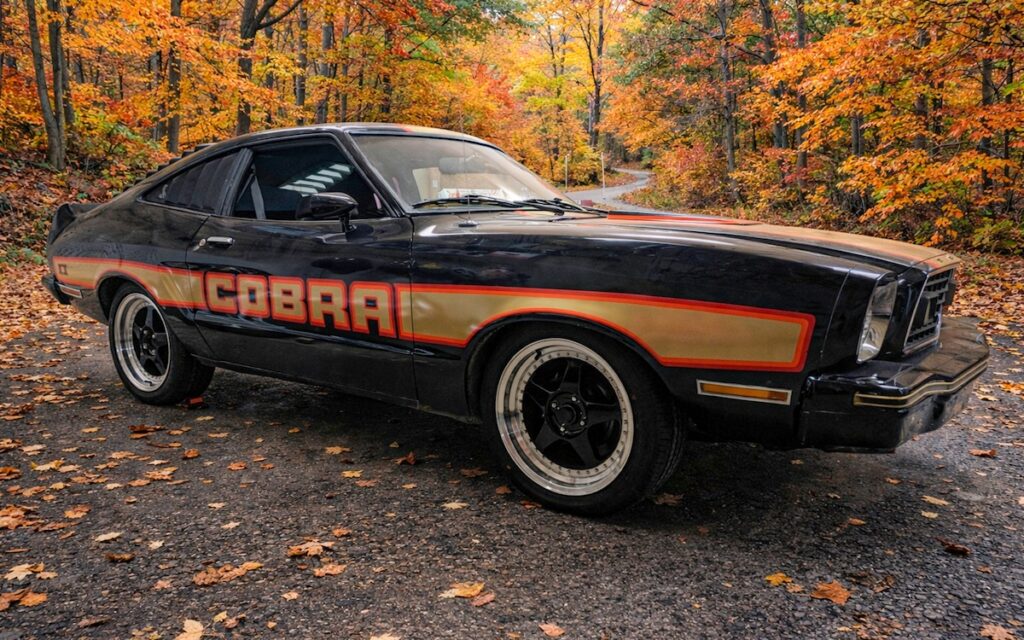
Behind the stripes and bold decals lies a Mustang born during one of the most turbulent periods in American automotive history. More importantly, it is a car that survived thanks to people like Braxton, who has owned his Mustang II Cobra II for nearly 26 years. His story reveals why this generation is not a mistake, but a chapter shaped by resilience and loyalty.
A Mustang shaped by survival
To understand the Mustang II Cobra II, context matters.
By the mid-1970s, the American car industry was under intense pressure. Oil crises changed consumer habits almost overnight. Emissions regulations tightened. Insurance companies targeted high-performance cars. As a result, the muscle car era came to an abrupt halt.
Ford faced a hard truth: the Mustang had to change or disappear.
Introduced in 1974, the Mustang II broke with tradition. It became smaller, lighter, and more efficient. Naturally, many enthusiasts felt disconnected from it. However, this shift was not about abandoning the Mustang spirit. Instead, it was about keeping the name alive during a period when excess was no longer possible.
The Cobra II: image over numbers
Within that constrained environment, Ford introduced the Cobra II package in 1976.
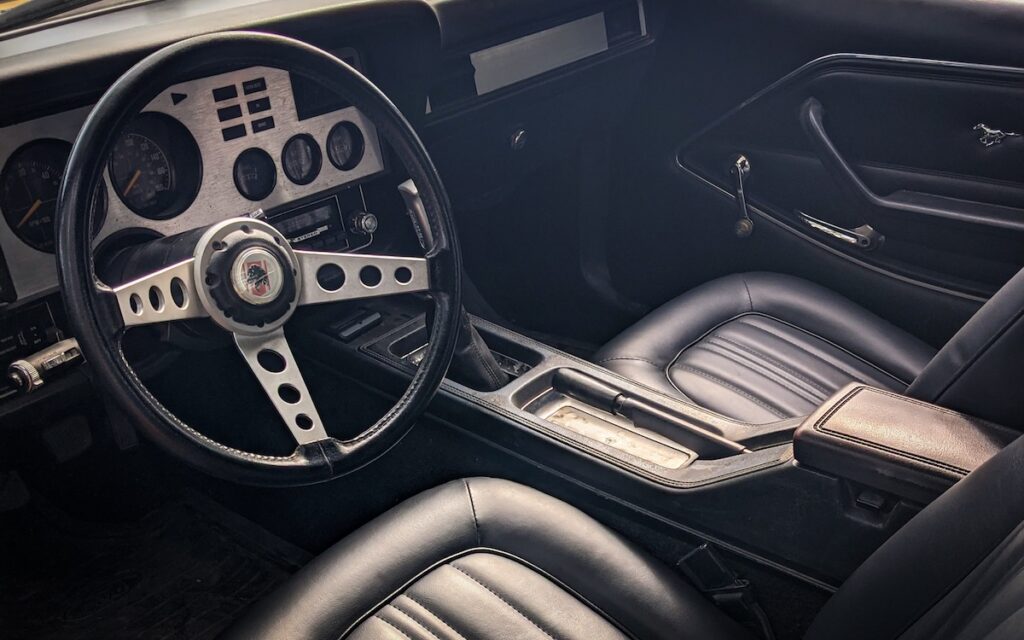
Rather than chasing performance figures it could no longer deliver, the brand chose a different strategy. The Cobra II focused on presence, identity, and attitude.
This version was never meant to replace the Shelbys of the past. Nor was it designed to dominate drag strips. Instead, it reminded buyers that the Mustang could still look bold, rebellious, and unmistakably American—even when regulations said otherwise.
In many ways, the Cobra II was a visual promise that better days would come.
What really defines a Mustang II Cobra II
From a technical standpoint, the Mustang II Cobra II offered several engine options depending on year and market. Buyers could choose between a 2.3-liter four-cylinder, a 2.8-liter V6, or the more symbolic 302 V8.
Even then, performance remained modest. With emissions controls in place, power outputs rarely impressed. Yet focusing only on horsepower misses the point.
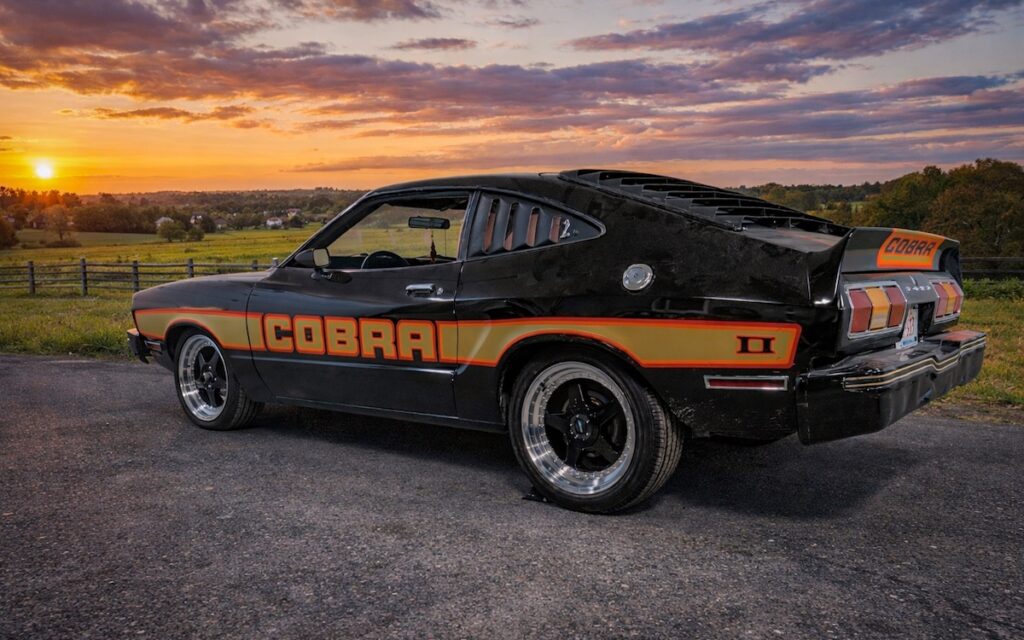
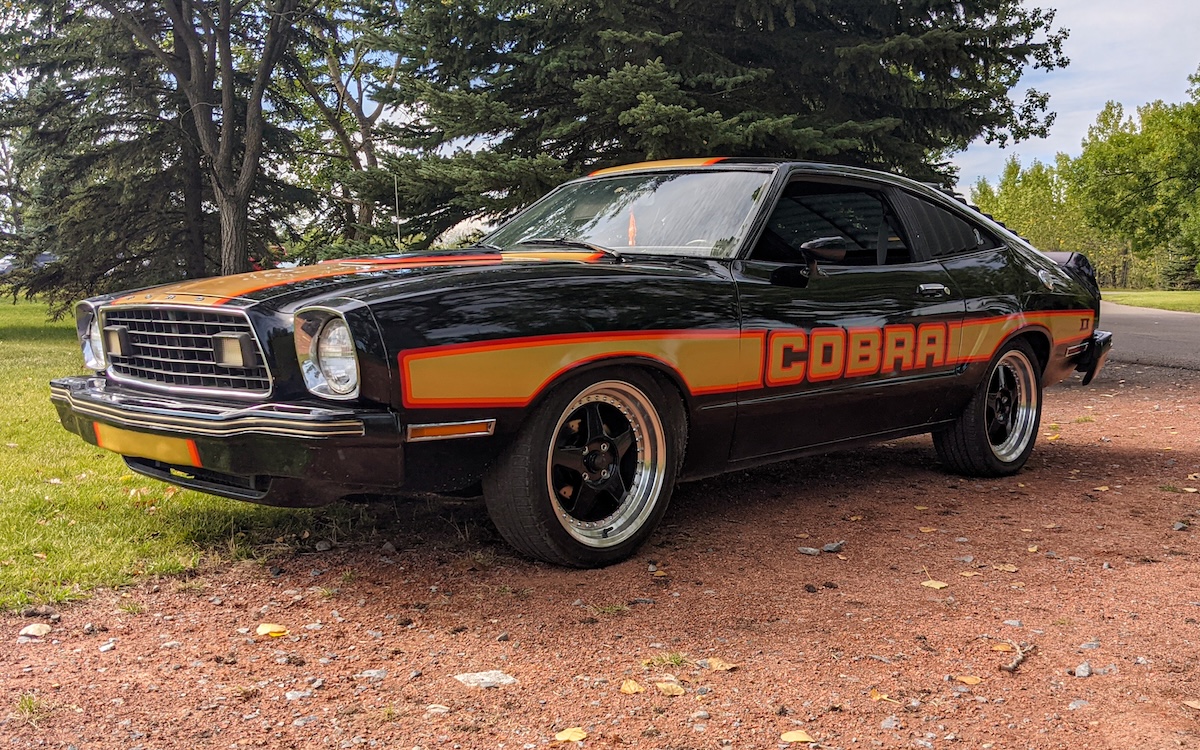
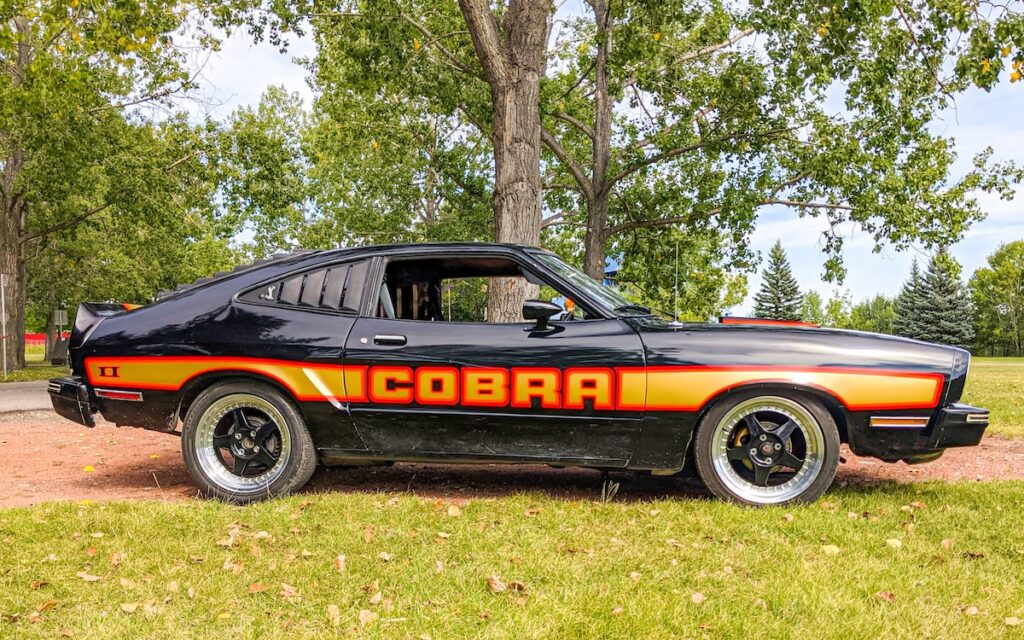
What truly defines the Mustang II Cobra II is its unmistakable design language. Bold “COBRA II” stripes stretch along the flanks. Large lettering dominates the body. Hood scoops, spoilers, and optional rear louvers complete a look that refuses subtlety. Consequently, the Cobra II stands out as one of the most expressive Mustangs ever produced.
Braxton and his Mustang II Cobra II
Braxton’s Cobra II captures that philosophy perfectly.
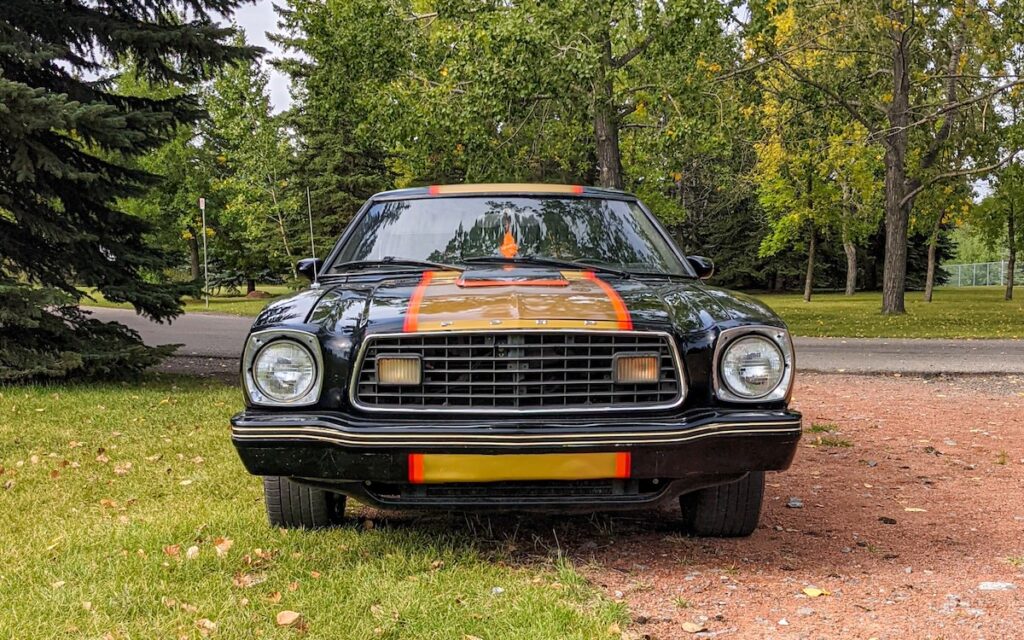
Finished in black with gold graphics, his car wears the factory decal package and rear window louvers with pride. Visually, it is loud, confident, and impossible to ignore.
“With the decal package, the car instantly grabs attention,” Braxton explains.
Over the past 26 years, he has never encountered another Cobra II identical to his in real life. That rarity adds to the emotional bond. For him, this Mustang isn’t just unusual—it feels personal.
Evolution without betrayal
Although the exterior remains close to factory specification, the story under the hood evolved over time. Like many owners, Braxton recognized the limitations imposed on the original engines. Instead of erasing the car’s identity, he chose to improve its drivability while respecting its roots.
This balance matters.
Rather than transforming the Cobra II into something it was never meant to be, Braxton focused on enjoyment. Reliability, usability, and consistency became priorities. As a result, the car remains true to its era while still fitting into modern driving life.
A misunderstood Mustang today
Within the Mustang community, criticism of the Mustang II generation persists. It is often described as underpowered, too small, or disconnected from the original spirit. Braxton hears those comments often, yet they no longer bother him.
“I mostly shrug and laugh,” he says. “Everyone has their opinion.”
Interestingly, time has changed the conversation. At modern car shows, Mustang IIs are now far rarer than early Mustangs or Fox Bodies. Because of that scarcity, curiosity is growing. People stop, ask questions, and look closer—sometimes for the first time.
Why this Mustang still matters
For Braxton, selling his Cobra II has never been an option.
It was his first car. It followed him through decades of life changes. It stayed when trends moved on.
“What I’d miss the most,” he says, “would be driving it… or simply seeing it in the garage.”
That quiet attachment explains everything.
The Mustang II Cobra II may never win universal approval. However, stories like this prove it was never meant to. Instead, it represents a Mustang that adapted, endured, and waited patiently to be understood.
Sometimes, survival is the most important performance of all.