Heather’s 1973 Mustang Mach 1: A Promise to Her Grandfather
Some Mustang stories begin the day someone gets the keys. Heather Jastrzemski’s began much earlier.
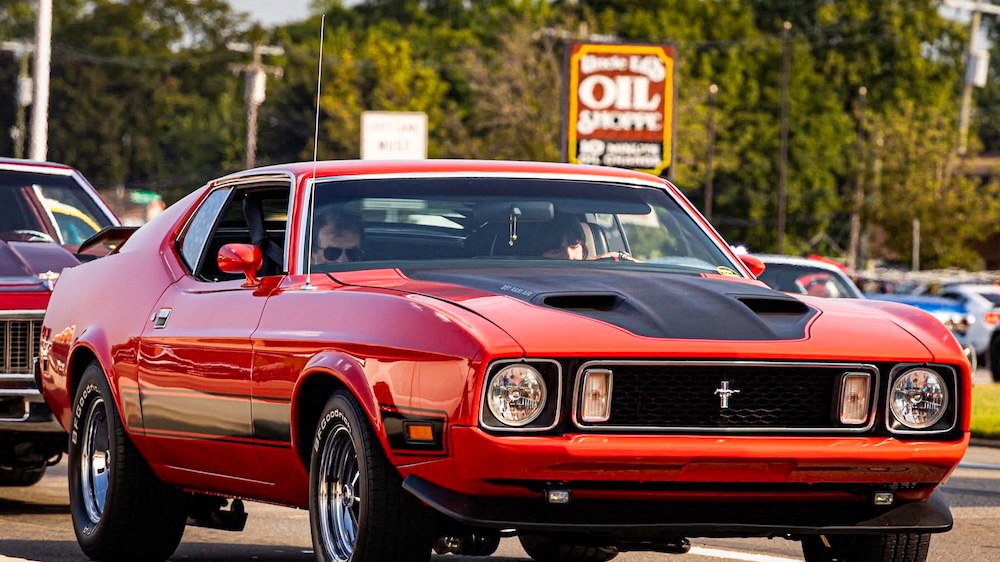
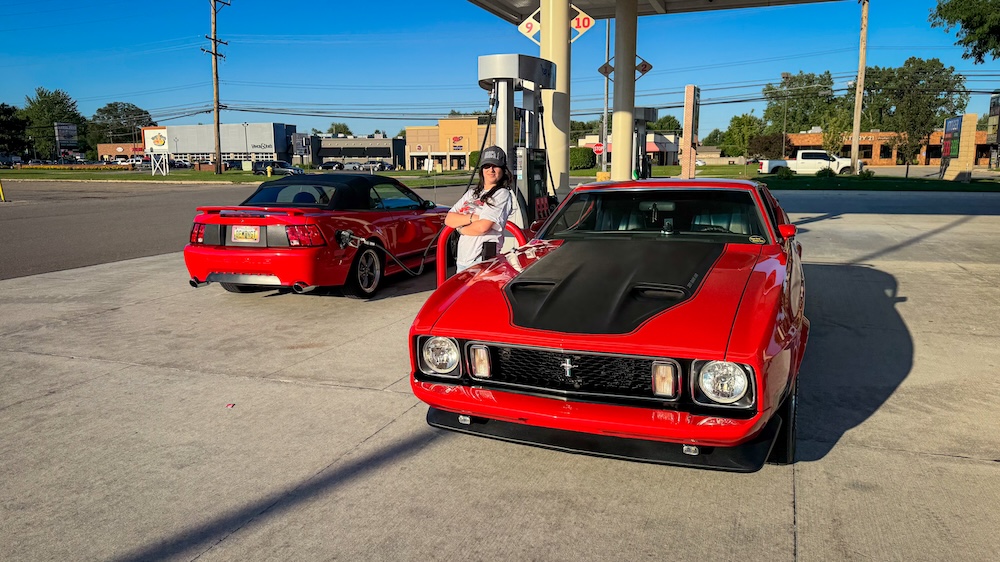
In the summer of 2026, Heather shared a few photos of her 1973 Mustang Mach 1 after fitting a fresh set of tires. Next on the list was touching up the black paint on the Magnum 500 wheels.
It brought back a memory.
When her grandfather, Frank Reeves, bought the same Mustang in 2001, Heather was five years old. Her first “job” around the car was washing those wheels while Frank cleaned the rest.
Twenty-five years later, she is still doing much the same thing.
Frank passed away in 2016, and Heather inherited the Mach 1 they had spent so many years enjoying together. The car is still in Michigan, still driven, still worked on, and still very much part of her life.
A Love of Cars Passed Down Early
Cars were everywhere in Frank Reeves’ life.
He built them, modified them and raced them. Over the years, he owned a number of Mustangs—some bought to fix up and flip, others to race.
He had a particular affection for the 1971–1973 body style.
Even the story of how he met Heather’s grandmother sounds appropriate: the two met in the staging lanes at Detroit Dragway.
Heather grew up around all of this. One of the small moments she still remembers was Frank sitting her down with a piece of paper, a pencil and one of his Mustang magazines. He asked her to draw what she saw.
She kept drawing.
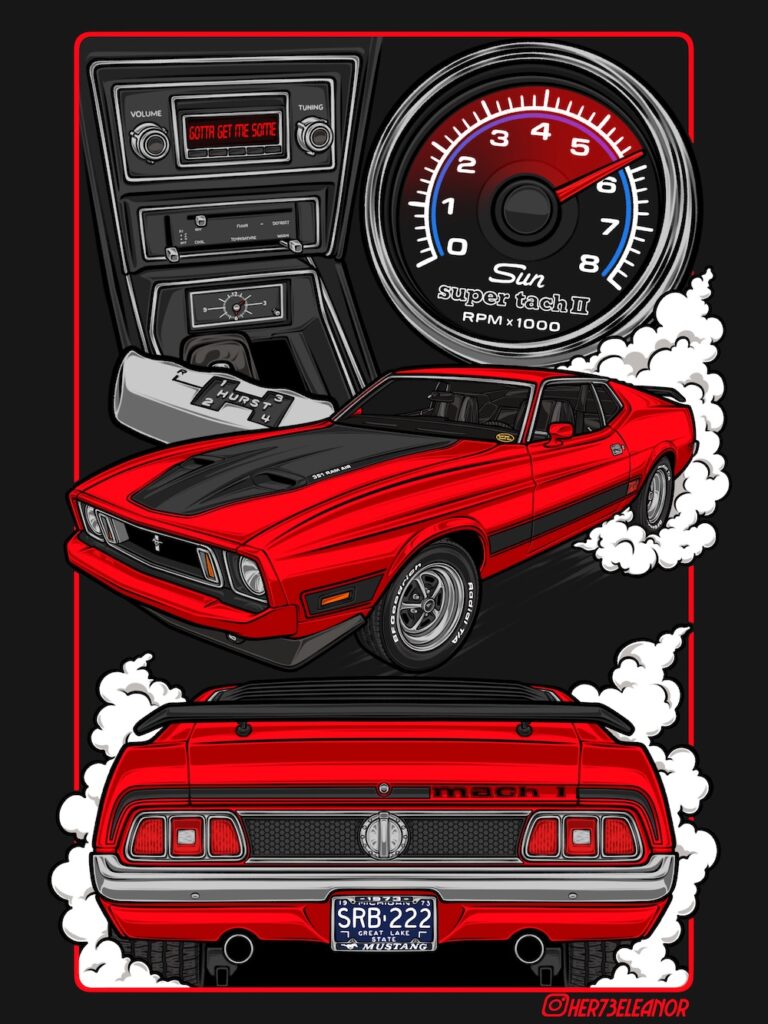
Today, Heather lives in Clinton Township, Michigan, and works as an automotive artist. Through Stanced Sketches, she creates digitally illustrated, cartoon-style versions of cars—including her own Mach 1.
The Mustang was already shaping her interests long before she was old enough to drive it.
A 1973 Mach 1 Joins the Family
Frank bought the 1973 Mustang Mach 1 in October 2001.
Heather was only five, but she still remembers seeing the car for the first time.
Its early life had been spent in the South. The Mach 1 was originally sold by C.C. Card Auto Co. in Cleveland, Tennessee, to a Georgia resident. It changed hands once before Frank became its third owner.
Being a Southern car, Heather remembers it being in great shape when Frank bought it.
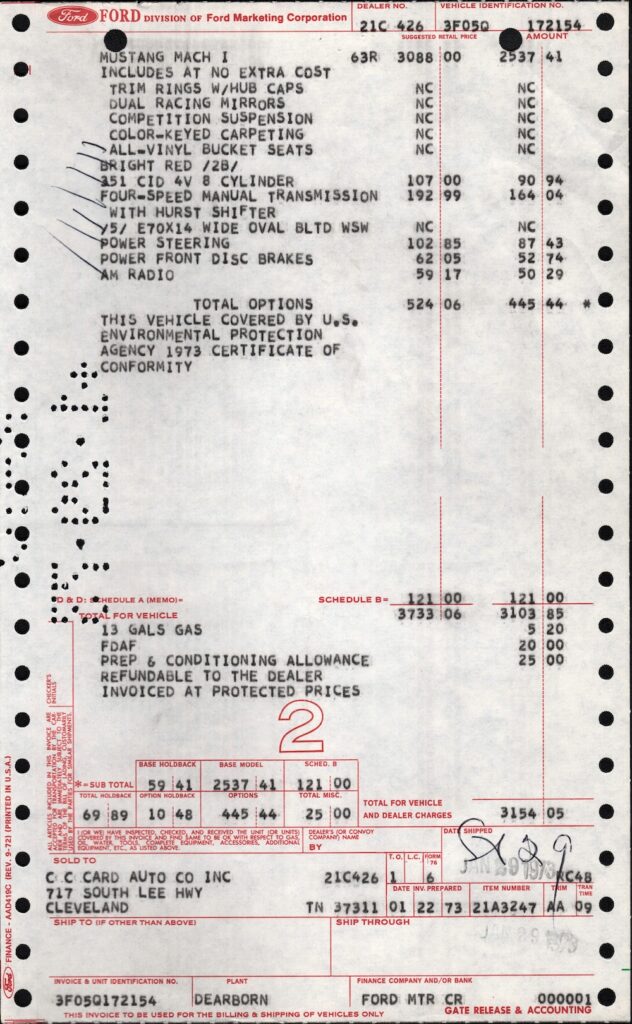
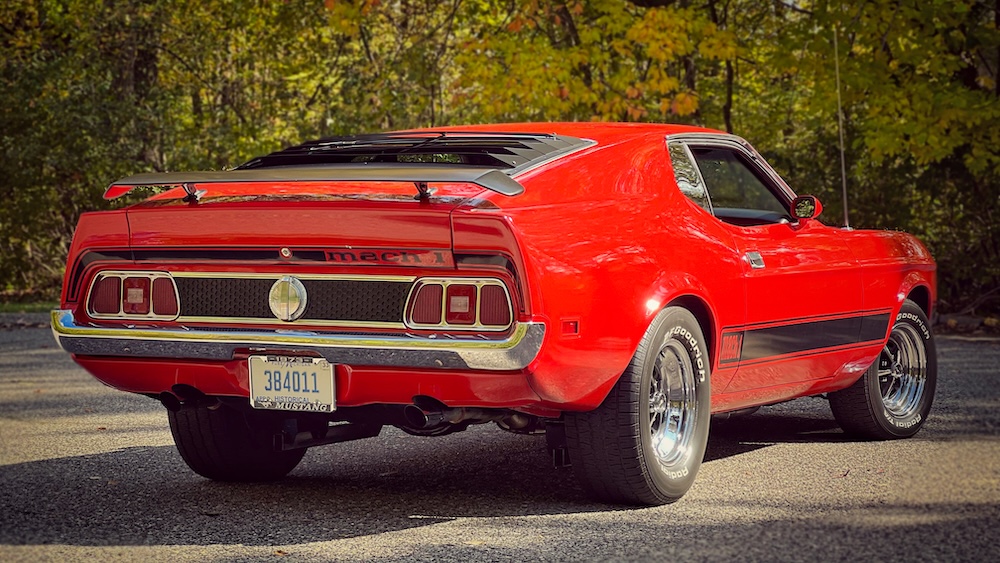
It retained its original Bright Red paint and much of its stock mechanical configuration, although it wore Cragar SS wheels and traction bars when Frank bought it.
Unlike some of the cars he had owned before, this Mustang was not intended as a quick project or resale.
This one was different. Frank saw it as his ideal mix of street performance and show car.
A Documented Q-Code Mach 1
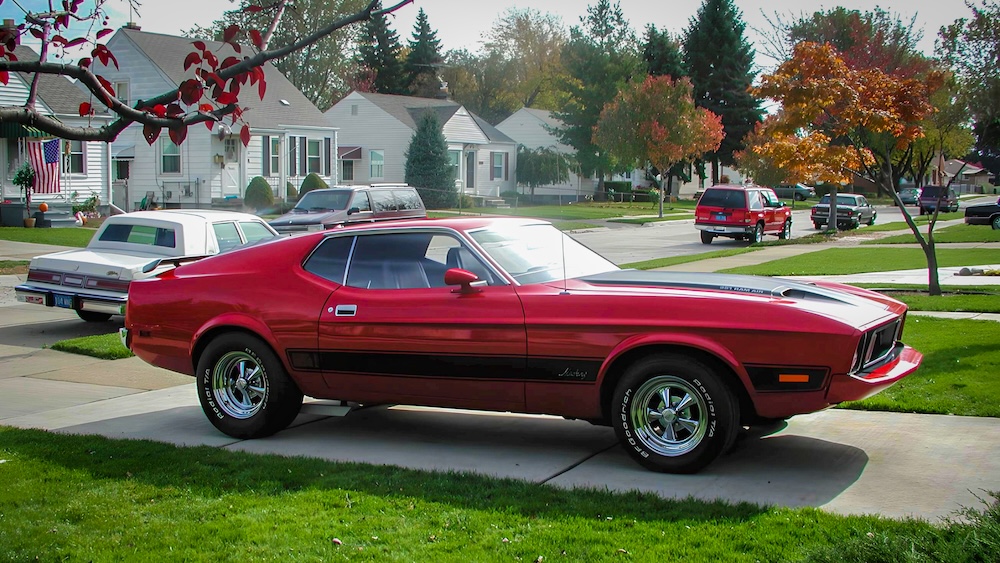
Heather still has two important pieces of paperwork with the car: its Marti Report and original Ford sales invoice.
The Mach 1 was built at Dearborn on January 29, 1973, thirteen days behind its scheduled build date.
It left the factory as a Q-code Mach 1 SportsRoof with a 351 Cleveland 4V, and four-speed manual transmission.
The original combination also included Bright Red paint, black knitted vinyl Mach 1 bucket seats and a 3.50 conventional rear axle. Options included power steering, power front disc brakes, an AM radio and E70x14 white-sidewall tires.
According to the Marti Report, 3,316 1973 Mustangs were built with this engine and transmission combination.
That does not make Heather’s car exceptionally rare, but it is an interesting configuration from the final year of the original Mustang generation.
Within months, the oil crisis would help change the American car market. For 1974, the Mustang would become something very different.
Frank’s Mach 1 came from the end of an era.
Ice Cream, Cruises and Learning the Car
None of those production numbers meant much to Heather when she was five.
The memories she has from those years are very different.
She remembers riding in the back seat. She remembers Michigan cruise events—the Gratiot Cruise, Harper Cruise and especially the Woodward Dream Cruise. And she remembers evening trips to Dairy Queen with her grandparents.
And she remembers cleaning the wheels.
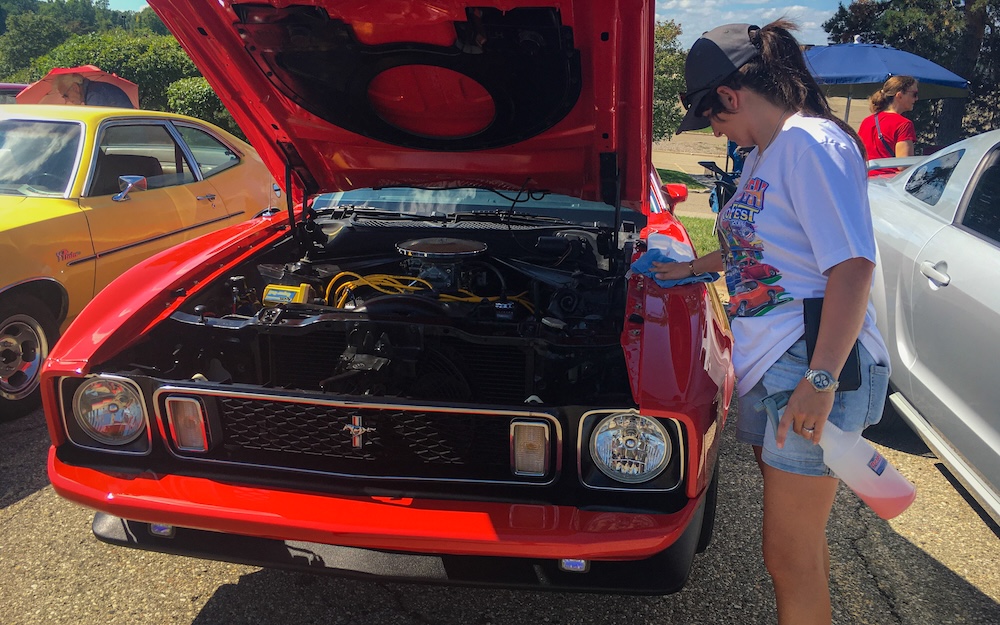
At first, that was her contribution. Frank washed the rest of the Mustang while Heather took care of the wheels. As she got older, she was trusted with more: the interior, the engine bay and eventually the entire car.
Then came the mechanical lessons.
Frank showed her how to adjust a carburetor, replace spark plugs and check their gaps. She learned the Mustang gradually, one small job at a time.
That matters when talking about the car today.
Heather did not suddenly inherit an unfamiliar classic after Frank died. She had already spent about fifteen years learning its habits, its mechanical setup and its little quirks alongside him.
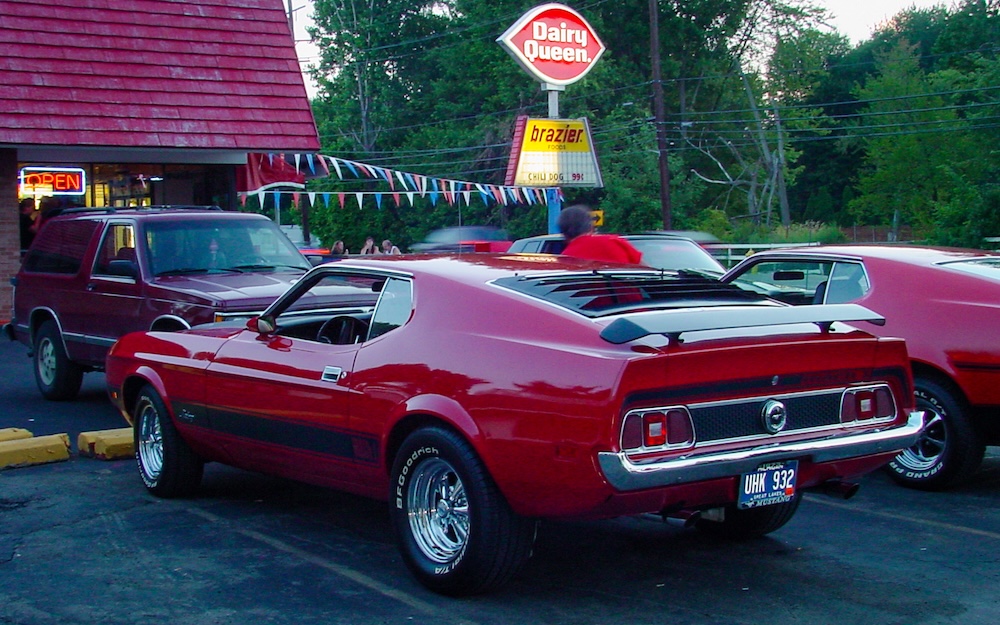
The family connection to Mustangs went beyond Frank’s car. In one July 2002 Dairy Queen photo, his red 1973 Mach 1 is parked next to Heather’s father’s red 1972 Mach 1—a car he still owns today.
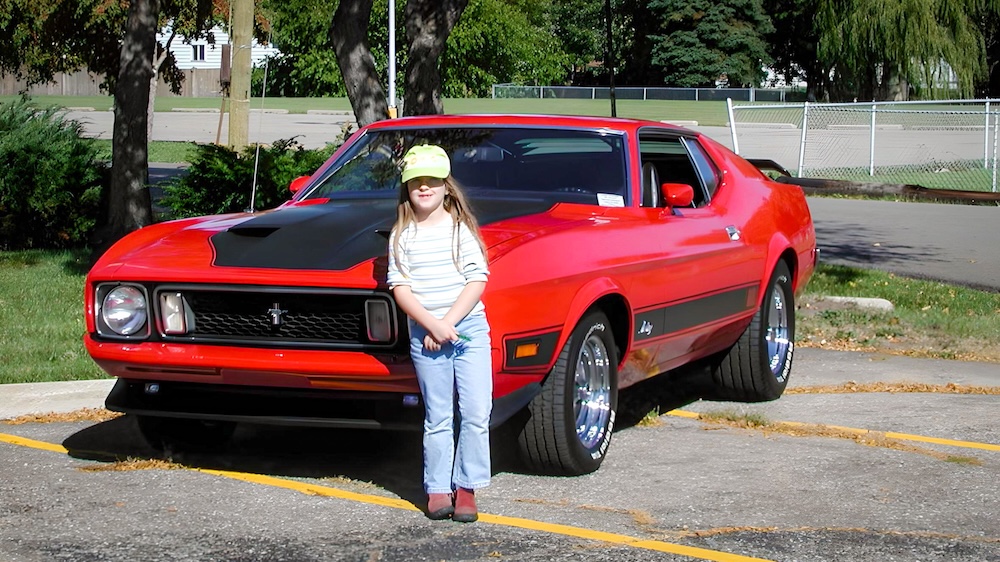
Frank Makes It His Own
The Mach 1 did not stay stock for long.
Frank replaced the Cragar SS wheels with staggered Magnum 500s and gradually changed the drivetrain to better suit the way he wanted the car to feel.
The 351 Cleveland received a Holley 780 four-barrel carburetor, Edelbrock Torker intake, Hooker Super Competition long-tube headers and Dynomax Super Turbo mufflers.
The original 3.50 rear axle was replaced by a 3.91 Detroit Locker.
Around 2012, Frank went much further.
The original 1973 low-compression cylinder heads were replaced by 1971 closed-chamber heads, bringing compression to roughly 11:1. Frank ported and polished the heads himself and matched the intake.
A Comp Cams Thumpr camshaft, upgraded valvetrain components and a Pertronix electronic ignition completed much of the package.
Like plenty of long-term project cars, the Mach 1 became a reflection of its owner rather than a frozen factory specification.
Before those later engine changes, though, the car went through something far more dramatic.
The Woodward Dream Cruise Accident
In August 2006, the Mach 1 was parked during the Woodward Dream Cruise.
An early-1960s Lincoln Continental participating in the cruise lost its brakes.
The Lincoln first struck another car. It then went out of control, left its path, hit a street sign and several trees, and finally slammed into the driver’s side of Frank’s Mustang.
Heather and her family watched it happen.
The impact was hard enough to push the Mach 1 several feet.
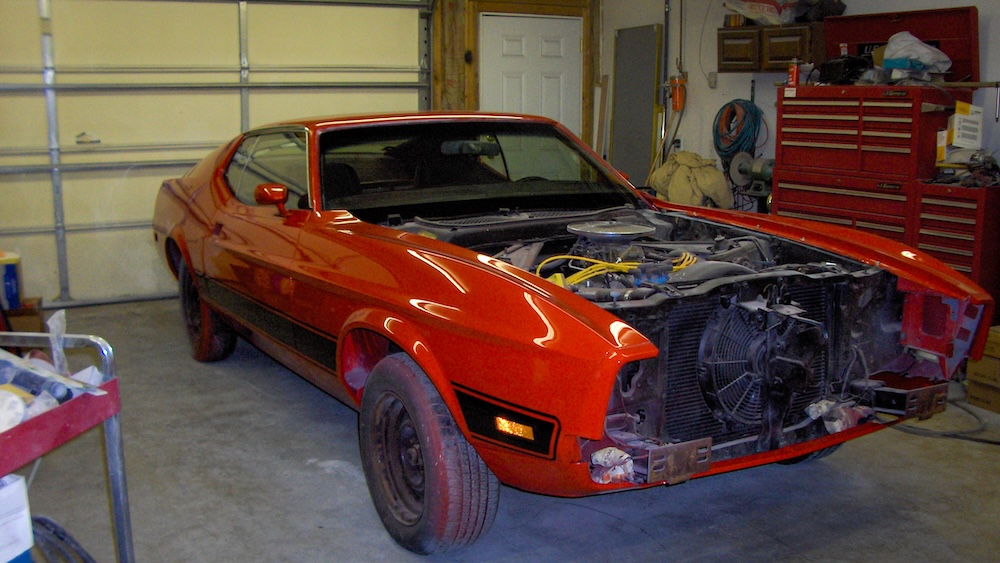
Once the initial shock wore off, the damage turned out to be manageable. The roof and floor were untouched. The rocker panel could be repaired.
The driver’s door and part of the quarter panel were not so lucky.
Frank knew bodywork, and years of Mustang projects meant he also had something useful tucked away: spare parts.
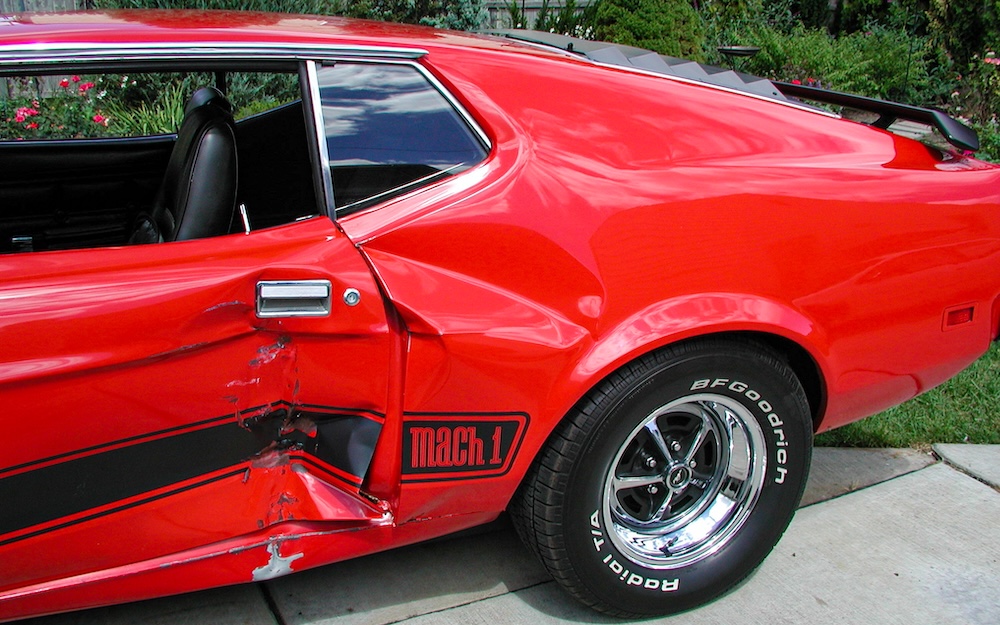
Two Years of Repairs
Among the parts Frank had saved was a door from another Mustang.
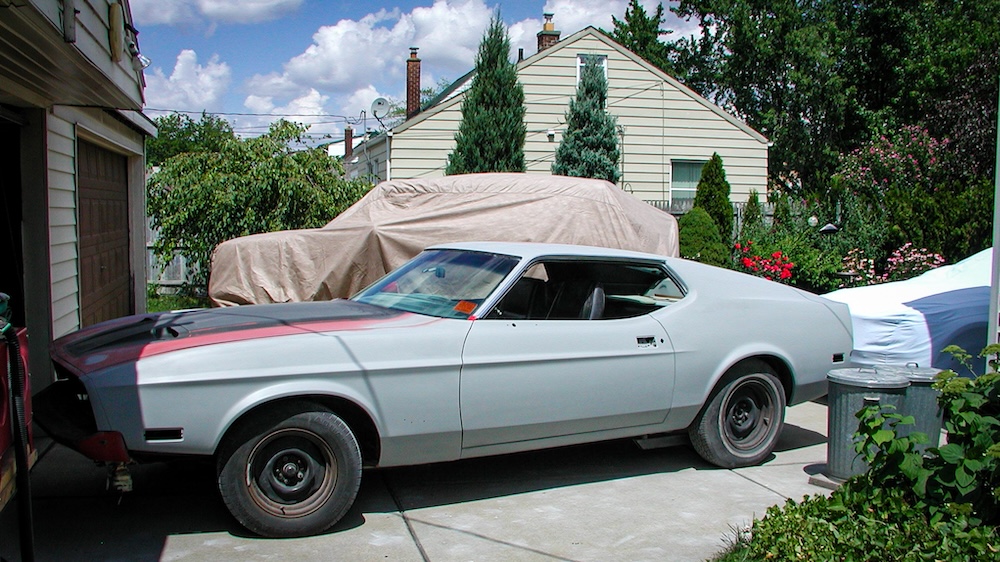
He replaced the damaged door, then cut and welded new quarter panels into both sides of the Mustang along with other metalwork the car needed.
What began as accident repair gradually became a much larger restoration.
The process took close to two years.
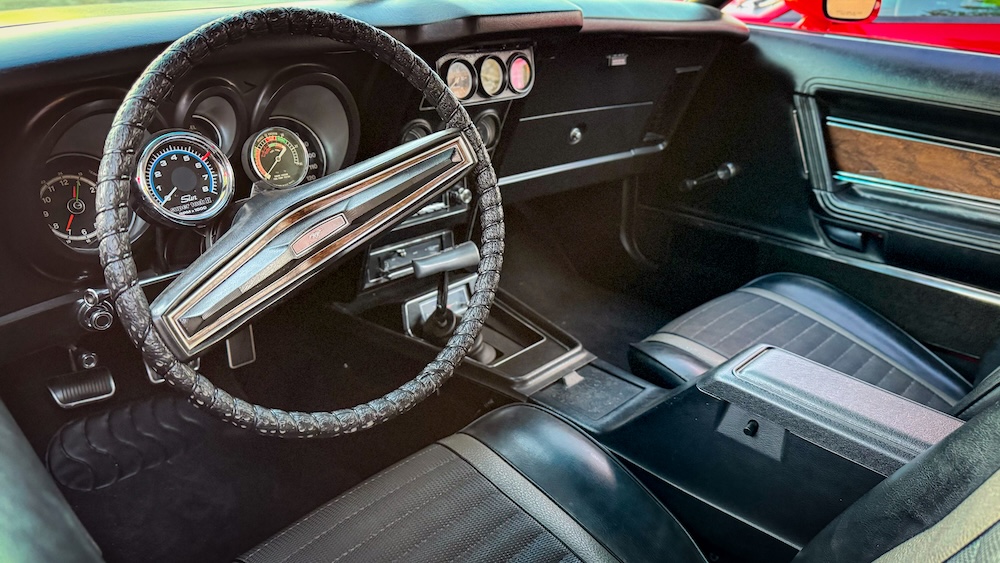
By 2008, the Mach 1 had fresh Bright Red paint under clear coat. Its interior was also redone, with the original standard setup replaced by Deluxe trim, a full-length center console and auxiliary gauges.
The accident had forced Frank to take the car apart more deeply than he probably planned. By the time it was back together, it had moved another step closer to the Mustang he wanted.
Heather was there for that process too.
Chasing Best of Show
After the restoration, Heather and Frank began putting even more effort into showing the car.
Their favorite events were run by the United Street Machines Association at the old Gibraltar Trade Center in Mount Clemens, Michigan. There were usually two or three shows there each summer.
Preparing the Mach 1 became a ritual.
They could spend weeks detailing it before a show. Afterward, they would go back over the car, searching for areas they might have missed or things that could be improved before the next event.
The Mustang earned its share of recognition.
One award, however, kept getting away from them: Best of Show.
Heather even remembers the competition—a 1973 Dodge Challenger that seemed to beat them over and over again.
They kept trying.
Their final show together was in August 2015.
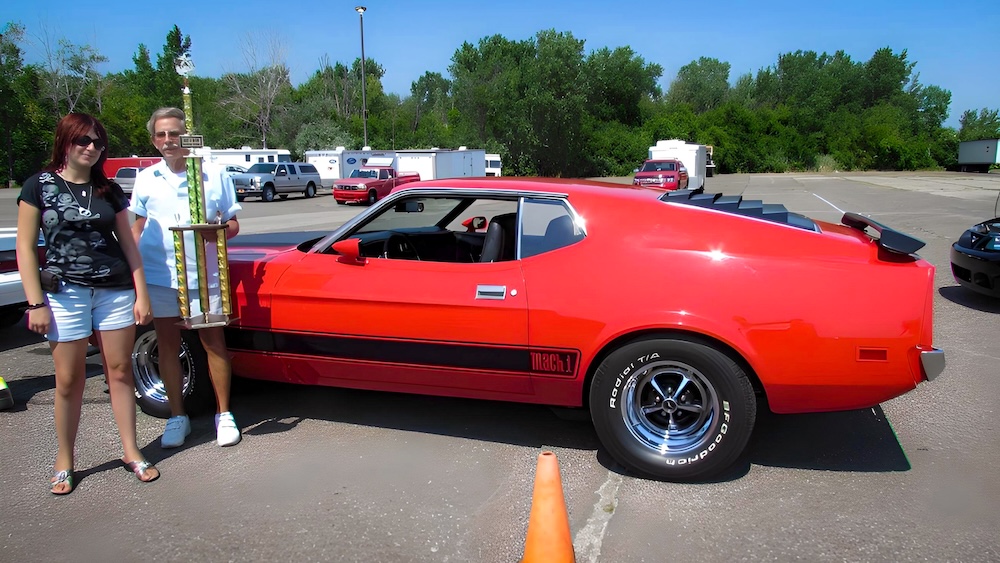
That photograph, taken by their friends Carl and Sue at a USMA show in 2013, would later become much more important than Heather could have known at the time.
A Promise to Frank
During the summer of 2015, Frank told Heather that he wanted her to have the Mach 1.
There was little doubt about who understood the car, or what it meant to the family. Heather had spent much of her childhood and teenage years beside him working on it.
Early the next year, Frank’s health deteriorated quickly. He was diagnosed with stage 4 lung and brain cancer.
Frank Reeves died on March 17, 2016.
Before he passed away, Heather made him a promise. She would win the Best of Show they had spent years trying to earn together. At that point, of course, the trophy was no longer just about a car show.
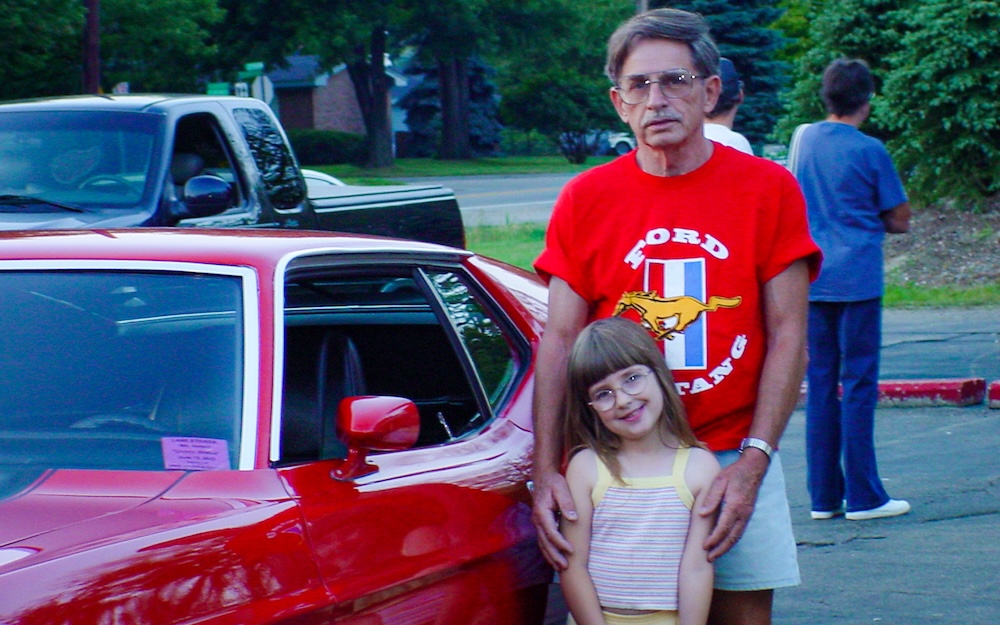
Around the same time, Carl and Sue remembered the photo they had taken of Heather and Frank at Gibraltar a few years earlier. Heather had forgotten about it.
They had the photograph framed and gave it to her after Frank’s death.
It remains her favorite photo.
One Last Chance
In 2017, the Gibraltar Trade Center was preparing to close.
The USMA shows Heather and Frank had attended together would disappear with it.
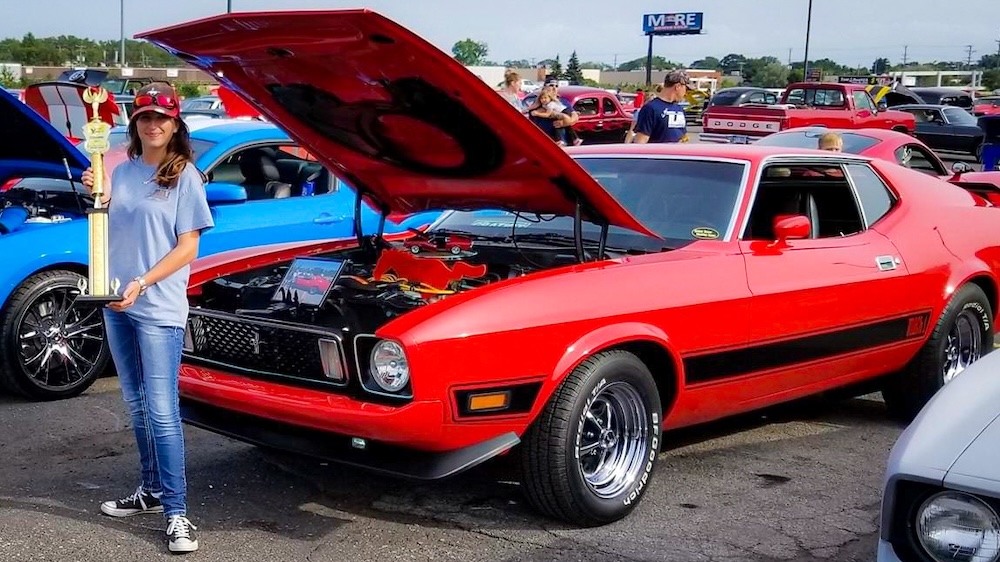
Heather realized she had one last chance to keep her promise in the same place where they had spent so many summers trying.
She went back to the routine she knew.
For weeks, she prepared the Mach 1. Every accessible area was cleaned. Seams, corners, details — anything that could cost points received attention.
Then came the result Frank and Heather had been chasing for years.
The 1973 Mach 1 won Best of Show.
Heather had kept her promise.
She still remembers the day as one of the most important she has had with the car.
She also wishes Frank could have been standing there beside it.
Learning to Be the Owner
The trophy did not turn the Mach 1 into something Heather wanted to park away and preserve.
Old cars rarely allow that anyway.
In 2020, the first time Heather took the Mach 1 to Woodward on her own, the clutch failed completely. COVID-era restrictions made it unusually difficult to find a flatbed, and getting the Mustang home ended up taking six hours.
The following week, Heather, her father and her fiancé removed the transmission and replaced the clutch.
While working on the car, they discovered that the underlying problem had a surprisingly simple cause: the clutch pedal height had been incorrectly adjusted for years.
Other work included a motor-mount conversion, most of the front suspension bushings, new front shocks, rear air shocks and a complete front-brake replacement.
The old Holley 780 was eventually replaced by a Holley 750 vacuum-secondary carburetor.
More recently, Heather and her fiancé refinished the black sections of the Magnum 500 wheels and the wheel wells. He has more painting experience and handled most of the spraying, while Heather helped mask the chrome.
She has also installed a Bluetooth RetroSound system, giving the car modern audio without putting a noticeably modern stereo in the dashboard.
The Mach 1 still gets used. Something breaks, it gets repaired. An improvement makes sense, it gets done.
The Small Things Frank Left Behind
Not everything in the Mustang has been updated.
When I asked Heather whether any of Frank’s belongings were still in the car, she did not mention anything especially valuable.
There are spare fuses. Some screwdrivers. A few wrenches.
Frank kept them with the Mustang, so that is where they stayed.
The old United Street Machines Assoc. windshield sticker is still there too. Heather has no plans to remove it.
After all those summers at Gibraltar, it belongs on the car.
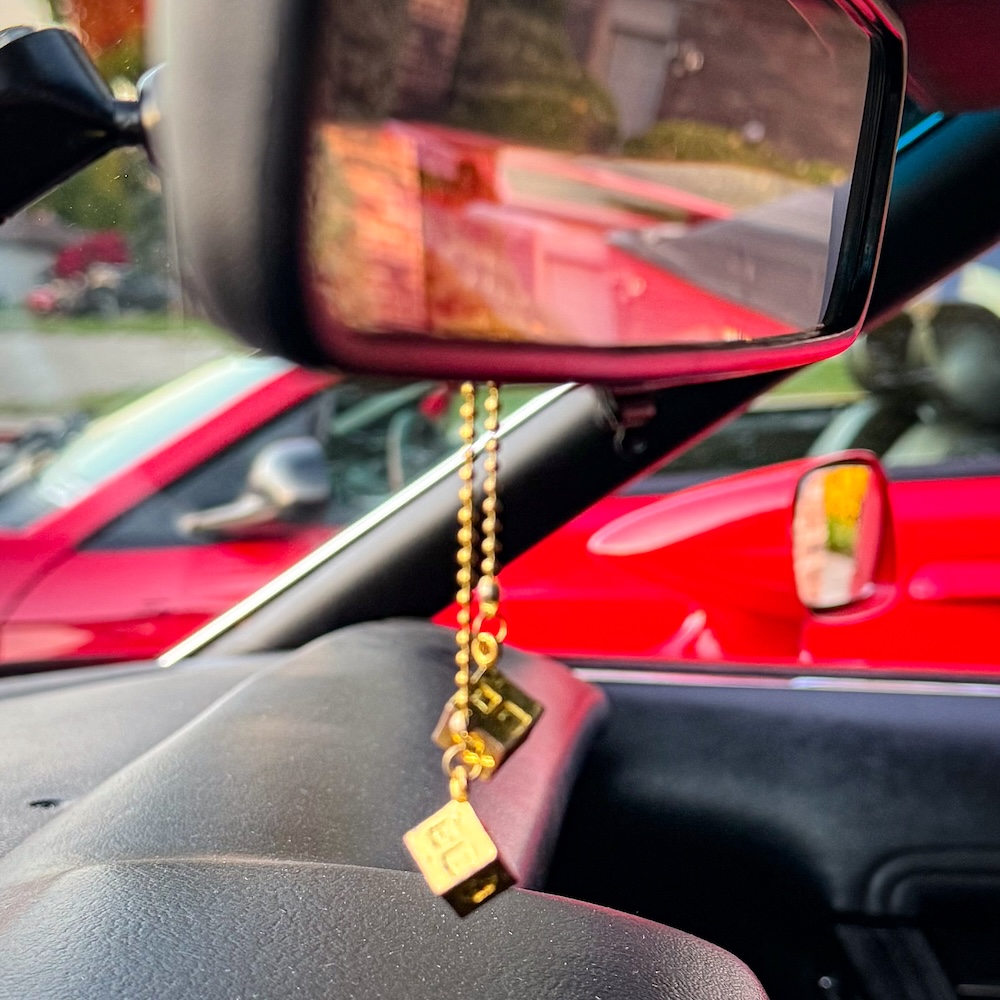
Then there are the two small metal dice hanging beneath the rearview mirror.
Frank never owned them.
Heather had bought them with the intention of giving them to him for his birthday. He passed away before she had the chance.
Their meaning comes from something else Heather and Frank shared.
A Little Bit of the Millennium Falcon
They both loved Star Wars.
The dice are replicas of the lucky dice associated with Han Solo and the Millennium Falcon.
Heather eventually began joking that Frank’s Mustang had something in common with the Falcon itself.
It has been modified over the years. Some hardware does not quite match. It has its own collection of noises, quirks and improvised solutions after more than half a century on the road.
A Mustang version of a “bucket of bolts,” perhaps.
The joke became more meaningful after Frank’s death.
One line from Star Wars stayed with Heather:
“No one’s ever really gone.”
Those dice were supposed to be a gift for Frank.
Instead, they now hang in the Mustang every time Heather drives it.
From Gone in 60 Seconds to Her73Eleanor
Frank also introduced Heather to another movie that stuck with her: the original 1974 Gone in 60 Seconds.
For Mustang enthusiasts, the distinction matters.
This is not the 2000 remake with Nicolas Cage and the custom Shelby-style Eleanor. H.B. Halicki’s original film featured a yellow 1971 Mustang modified to appear as a 1973.
Heather grew up watching that Eleanor.
So when she created a Facebook page for her own Mach 1 in 2026, the name came naturally: Her73Eleanor.
There is a certain logic to it. Heather’s Mach 1 has also survived an accident, extensive repairs and decades of modifications, yet it remains very much a road car.
It is not her only Mustang, either.
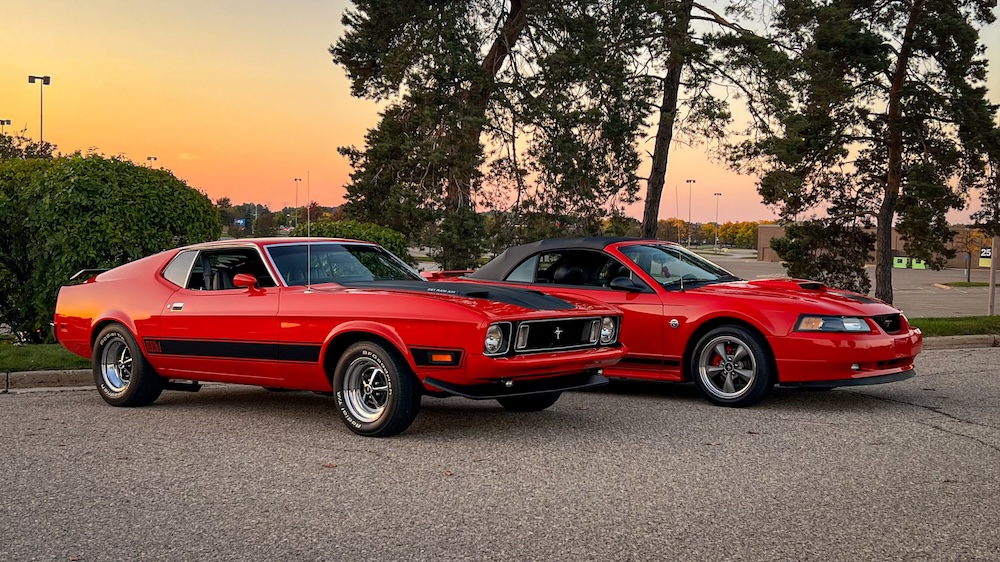
In June 2016, a few months after Frank’s death, Heather bought a 2004 Mustang GT Convertible. She had always liked the fourth-generation Mustang, and over time she added several 2003–2004 Mach 1-inspired styling pieces as a tribute to Frank’s car.
The GT has a nickname too: DemonGT.
Heather says that comes from its habit of ensuring that anything capable of going wrong eventually does.
More Than 112,000 Miles
Heather’s Mach 1 has now traveled more than 112,000 miles.
She does not talk about that number as if the car is approaching the end of anything.
Quite the opposite.
And no, the Mustang is not for sale.
After twenty-five years, Heather describes it less like a possession than a member of the family. It is also where she goes when she needs a little time away from everything else.
You can put a value on a 1973 Mach 1.
You can study its Q-code VIN, its Cleveland, its four-speed and its options. The Marti Report can tell you how the car left Dearborn in January 1973.
What it cannot show is a five-year-old cleaning wheels while her grandfather washed the body.
It does not record Dairy Queen trips, summers on Woodward, weeks spent preparing for car shows or the photograph Carl and Sue eventually placed in a frame.
Heather does not need paperwork to find those parts of the Mustang’s history.
She just needs the keys.
“Hot Rod Lincoln”
I asked Heather what brings Frank back most clearly when she drives the car today.
Her answer was not a trophy, a tool or one of the modifications he made.
It was the way he drove.
Frank liked to let the Cleveland rev in first, come off the clutch hard enough to make the tires complain, then grab second.
Heather still does it from time to time.
If “Hot Rod Lincoln” happens to come on, the memory gets even better.
It was one of their favorite songs. When Heather was little, Frank would walk her up to a local car-show DJ named “Rockin’ Ronnie” so she could ask him to play it.
Back in 2001, Heather’s job was washing the wheels.
The same Magnum 500s are still on the Mustang today.
Frank’s tools remain in the car. The old USMA sticker is still on the windshield. Han Solo’s dice move beneath the rearview mirror.
Then Heather starts the Cleveland, puts the Mach 1 in gear and heads back out.
Frank is not sitting beside her anymore.
But in this car, he is never very far away.